| | | 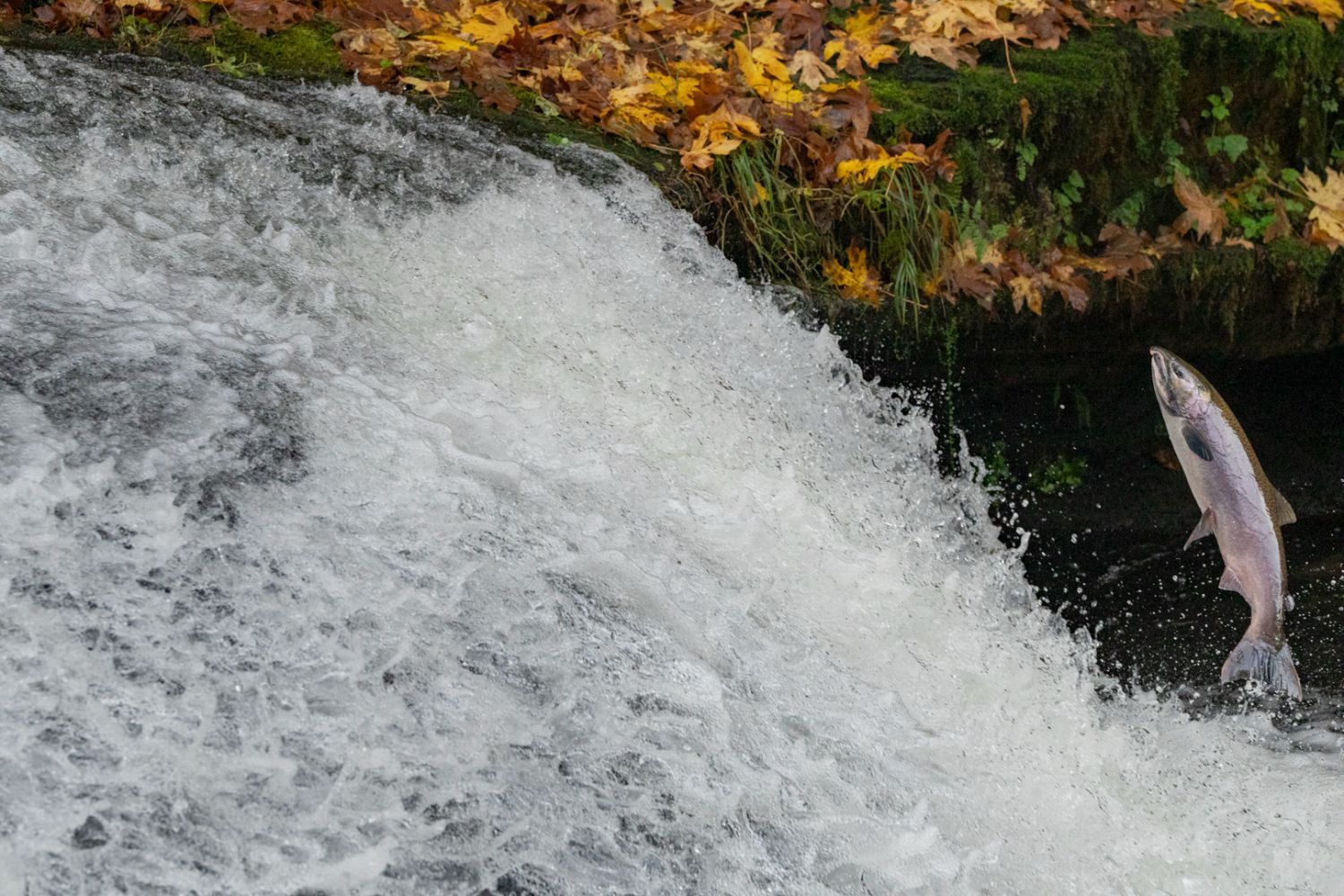 | An Oregon Coast coho jumping up a waterfall during its upstream migration. Photo by Conrad Gowell. |
| | Wild Fish Runs The Wild Fish Conservancy Newsletter
November 2025 |
| This November, we want to express our deep gratitude to you, our dedicated members and supporters. Your steadfast belief in our mission—and your commitment to protecting the Northwest’s wild fish and the ecosystems we all depend on—makes our work possible. Your support empowers our staff to pursue bold science, meaningful policy change, and hands-on action that safeguard wild fish for generations to come. In this month’s edition of Wild Fish Runs, we’re excited to share a look at some of the innovative fieldwork, groundbreaking research, and on-the-ground advocacy that your support makes possible. |
| | |
|
| Field Notes: Updates on Our Current Projects Discover how Wild Fish Conservancy staff are working in the field to safeguard wild fish and their habitats. Here’s a look at just a few of the projects we’re focused on right now. |
|
|
| 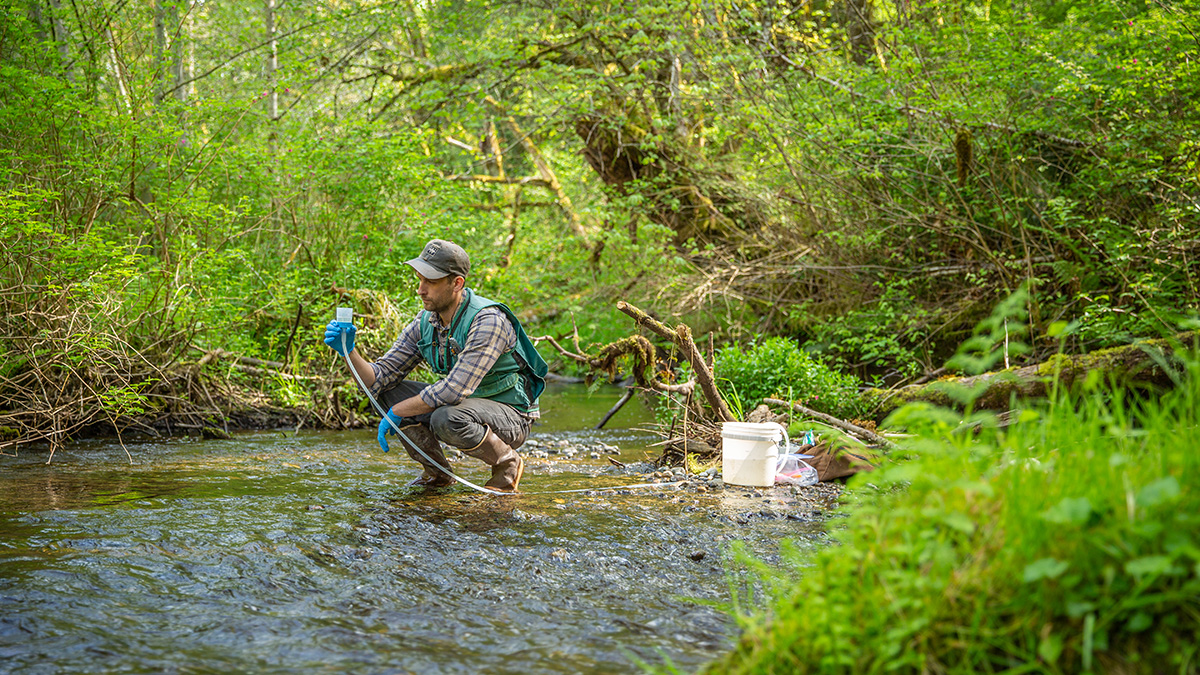 | Wild Fish Conservancy biologist Aaron Jorgenson sampling eDNA on the Kitsap Peninsula. Photo by Mac Holt. |
| Reading the Water: Updates from Our eDNA Research Wild Fish Conservancy (WFC) continues its legacy of innovation, using pioneering science to identify and protect fish habitat across the Pacific Northwest. As fish move through rivers and streams, they leave behind an invisible trail of DNA in the water—a secret calling card. By collecting small water samples and isolating these microscopic markers—known as environmental DNA, or eDNA—we can uncover which species are present, where they travel, and how they interact with different habitats. This innovative approach provides an efficient, non-invasive, and cost-effective tool for studying even the most rare and elusive fish, deepening our understanding of the ecosystems that sustain them. Over the past nine years, WFC has collected more than 1,200 eDNA samples from watersheds across Washington. From mapping bull trout distribution in rivers where their presence was previously undocumented to studying juvenile Chinook that use small, non-natal Puget Sound streams and estuaries, WFC is using eDNA to shed new light on fish ecology while protecting Puget Sound’s most vulnerable salmonid populations. Currently, WFC is leading two ongoing eDNA projects—one in partnership with Seattle Public Utilities and another with Sustainable Bainbridge. Both projects use eDNA to better understand salmon and trout distribution in watersheds fragmented by human-made barriers; information that will guide habitat restoration efforts to the project sites where it will provide the greatest ecological benefit. The data collected will also serve as a pre-restoration baseline, providing critical insights into fish recolonization once fish passage is restored. To explore WFC’s previously collected eDNA data, we invite you to use the new interactive eDNA map on our website. For questions or ideas for collaboration, please reach out to our Director of Science and Research, Jamie Glasgow, at [email protected]. |
| | |
|
| 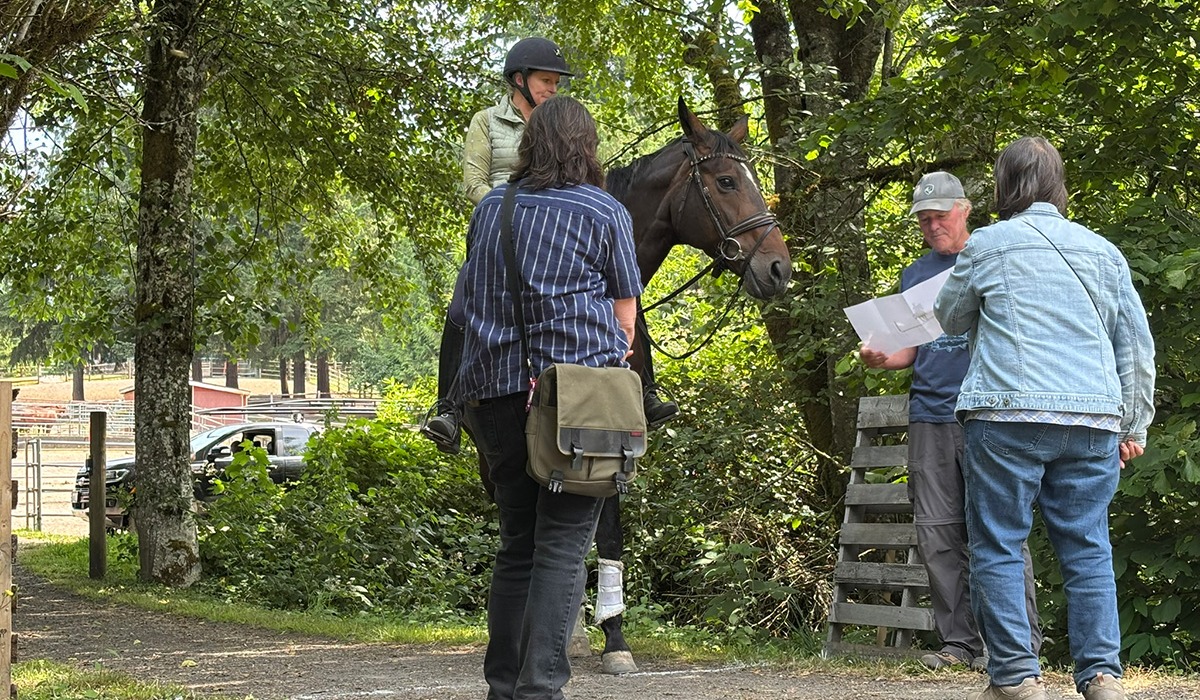 | Bainbridge Island Land Trust, Barnabee Farms landowner, and our project engineer meet to discuss the Barnabee Farms fish passage project. |
| Partnership and Science-Based Planning Lead to Action in Springbrook Creek Strong partnerships and science-based planning are driving meaningful restoration in Springbrook Creek, a 1,000-acre watershed on Bainbridge Island that supports salmon, coastal cutthroat trout, and threatened Puget Sound steelhead. Between 2016–2018, Wild Fish Conservancy (WFC) partnered with the Bainbridge Island Land Trust (BILT) and other local partners to identify factors limiting the watershed’s ecological health and prioritize 20 key restoration projects.
Since then, WFC and its partners have turned these plans into action. In 2023, WFC and BILT removed a failing barrier culvert in the headwaters of the watershed with a footbridge, restoring stream flow and fish passage on a conserved property. Now, WFC and BILT are working together again, this time on the Barnabee Farms fish passage project. This project will replace another partial barrier culvert with a new bridge, allowing vehicles and horses to safely cross the creek while opening up 3.4 miles of upstream spawning and rearing habitat for salmon and steelhead.
Springbrook Creek is a clear example of how research-driven restoration and strong partnerships lead to measurable progress toward healthier ecosystems. Read the full update on our website to see how science is guiding action and protecting the ecological future of this vital watershed. |
| | |
|
| Join Our Team—Wild Fish Conservancy Is Hiring! Wild Fish Conservancy is seeking a Fisheries Field Technician to support restoration and research projects throughout Western Washington. This seasonal, full-time (up to 40 hours per week) role is a unique opportunity for an experienced, thoughtful, and mission-driven individual who has a strong conservation ethic and respect for nature and science.
The Fisheries Field Technician will gain hands-on experience with culvert inventories, salmon spawning surveys, aquatic habitat assessments, environmental DNA (eDNA) studies, and collaborative work with our experienced staff and project partners. The position carries the potential for regular employment, and applicants interested in long-term opportunities are encouraged to apply.
If you or someone you know is ready to make a meaningful impact on the Northwest’s wild fish and their habitats, we’d love to hear from you—apply today! |
| | |
|
| 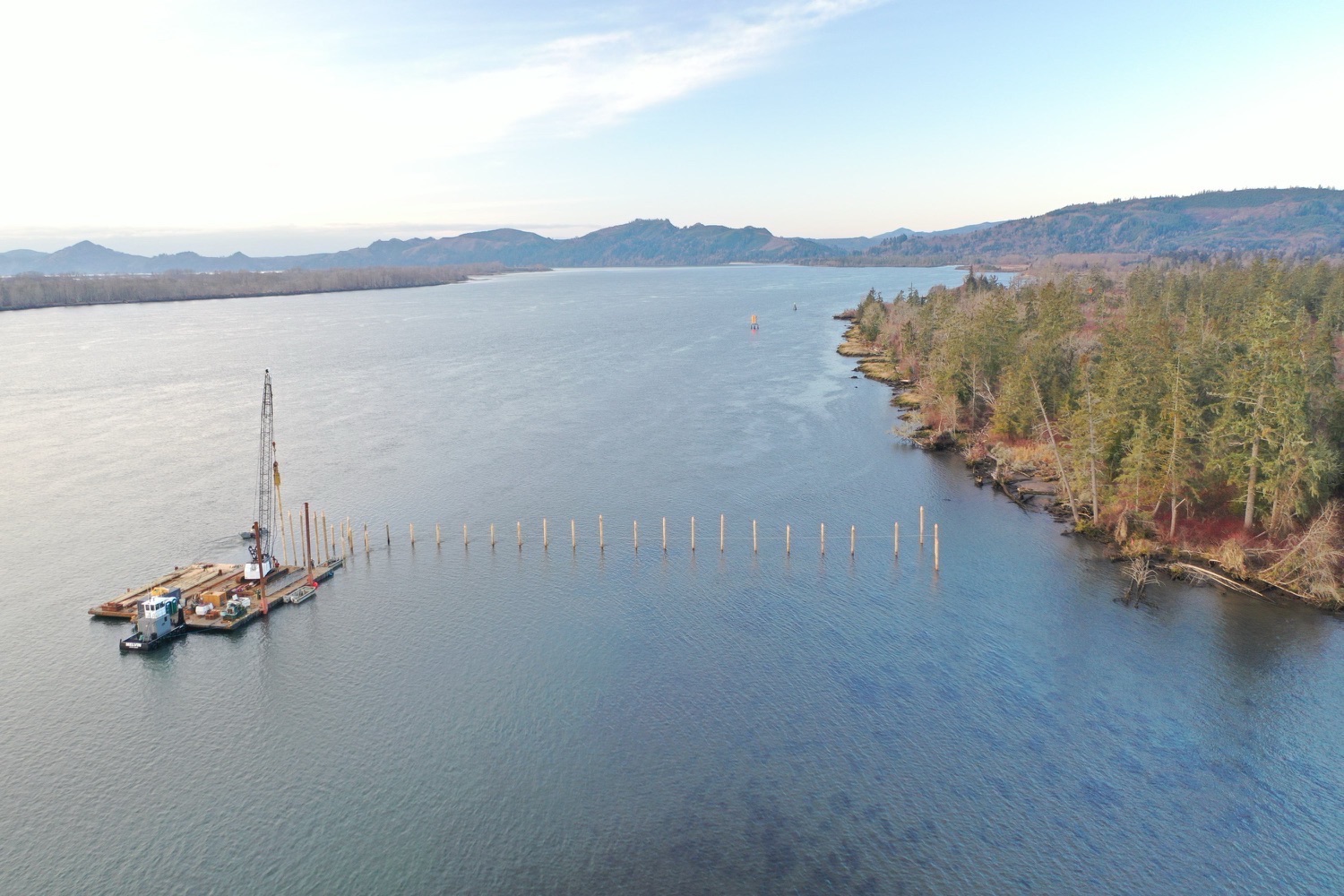 | Hunting Islands fish trap under construction on the lower Columbia River. |
| Chinook Observer Highlights Lower Columbia River Fish Traps Wild Fish Conservancy’s (WFC) groundbreaking fish trap research on the lower Columbia River was featured this month in a new Chinook Observer article, highlighting the trap’s first sanctioned commercial use in nearly a century as part of Oregon and Washington’s Emerging Commercial Fishery.
As one of three selective fishing gears being evaluated during the fishery's five-year period, more than a decade of research by WFC and our commercial fishing partners has shown that fish traps offer a sustainable alternative to conventional gillnetting and are now being tested for their commercial and economic viability.
The article explores how pound-net fish traps function and were used historically—and how WFC has adapted the gear for modern use. It also addresses long-standing challenges with the gillnet fishery—including a major data gap emphasized by WFC biologist Adrian Tuohy: |
| “Washington and Oregon have never collected post-release data on gillnets for bycatch species in these key fisheries in the fall,” says Tuohy in the article. “And I find that actually kind of shocking, to be honest.” |
| Unlike the conventional gillnet fishery, this alternative gear has been thoroughly studied and provides commercial fishers with a new means to safely sort their catch, selectively harvest hatchery fish, and protect wild salmon and steelhead bycatch with nearly 100% post-release survival for population recovery. Visit our website to read the full article and learn more about WFC’s groundbreaking research and the Emerging Commercial Fishery’s historic first year. |
| | |
|
| | Make a Gift for Wild Fish For more than 30 years, Wild Fish Conservancy has worked to take on the toughest challenges facing wild fish and the ecosystems they depend on—and we couldn't do it without the generosity of people like you. Your support helps safeguard wild fish for generations to come, advancing our mission to preserve, protect, and restore the Northwest's wild fish and their ecosystems through science, education, and advocacy. As the year comes to a close, your gift can make an even greater difference. Help keep this vital work moving forward in 2026 and beyond with a gift today! |
| | |
|
| Wild Fish Conservancy News and Updates Learn about Wild Fish Conservancy's recent legal victories, policy advancements, and advocacy efforts—plus other important news and information from our organization. |
|
|
| 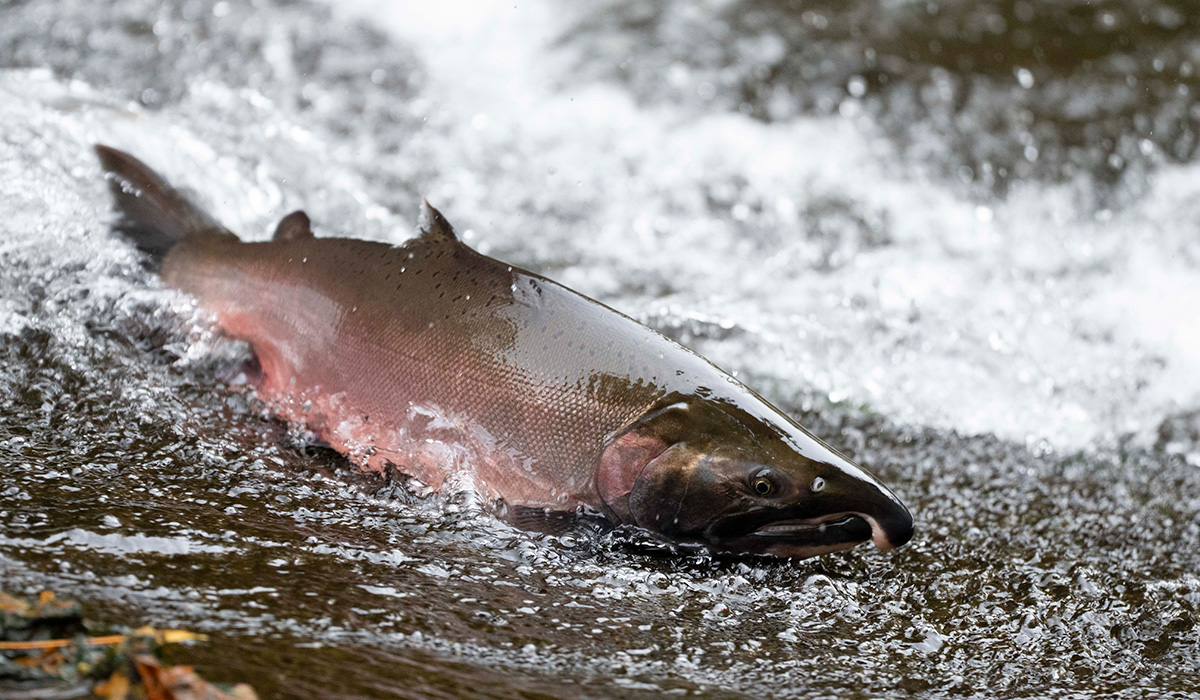 | Oregon Coast coho returning to spawn. Photo by Conrad Gowell. |
| The Unseen Advocacy Behind the Public Commenting Process When you think of the work Wild Fish Conservancy (WFC) does, you might picture biologists in waders restoring a stream bank or lawyers in a courtroom fighting for clean water. But there is another critical, often invisible, front in the fight for wild fish: the public comment period. In our recent news post, we take a close look at the public commenting process through the lens of a recent comment letter we submitted to the Pacific Fisheries Management Council on the management of Oregon Coast (OCN) coho salmon. Learn how our team of scientists dives into the technical weeds of a proposal to provide rigorous, peer-review-style analyses that inform real-world fisheries management decisions. Our ongoing engagement in the public comment process exemplifies our continuous advocacy for wild fish and their ecosystems. Though this work often goes unseen, it has a profound impact on the decisions that determine their future. Read the full news post on our website to learn more about our recent comment letter—and other comments we’ve submitted this year on issues affecting wild fish. |
| | |
|
| Do You Have a Legal or Policy Concern We often hear from citizens worried that environmental laws aren’t being followed. When that happens, we work with legal teams to evaluate whether action needs to be taken and, if warranted, use the court system to enforce laws like the Clean Water Act, Endangered Species Act, and other laws designed to protect wild fish. You can share your legal or policy concerns with us through our online form. |
| | |
|
| 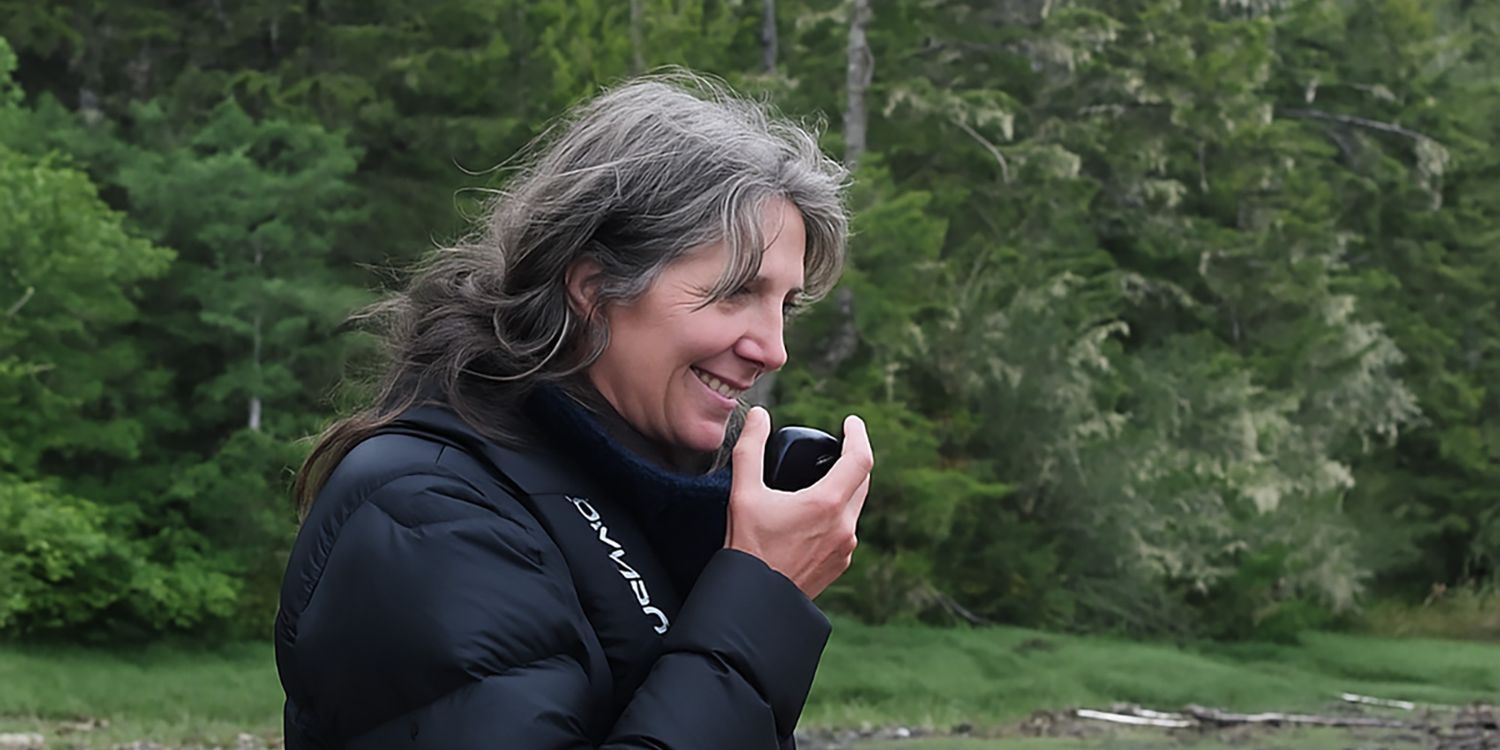 | Wild Fish Conservancy's newest board member, Misty MacDuffee. Photo courtesy of Misty MacDuffee. |
| Wild Fish Conservancy Welcomes New Board Member: Misty MacDuffee |
|
|
| Wild Fish Conservancy is thrilled to welcome Misty MacDuffee to our board! Misty is a salmon biologist whose work focuses on the ecology and management of Pacific salmon and the species and ecosystems that depend on them. As a Biologist and Wild Salmon Program Director for Raincoast, Misty works to integrate ecological science into fisheries management and policies processes, advancing approaches that protect salmon diversity, habitat, and resilience. Misty brings extensive experience and a valuable perspective to our organization, and we are so grateful to have her on our board. As she steps into her new role on our board, Misty shared: |
| I have long admired the work of Wild Fish Conservancy and had begun some cross-border collaborations with them on issues facing Chinook salmon and Southern Resident killer whales when, in 2018, I had the opportunity to volunteer on the Columbia River pound net. It was an exciting, hands-on experience—and deeply inspiring to see how a commercial terminal fishery could address so many of the challenges associated with marine Chinook fisheries, particularly in Canada. The experience only deepened my regard for the organization. Over the years, I’ve had the pleasure of getting to know more of the remarkable team. It’s a privilege to help serve them in ways that support their innovative, evidence-based, and solution-driven work. |
| | |
|
|
|
| | Wild Fish Conservancy
PO Box 402 | Duvall, Washington 98019
425.788.1167 | [email protected] |
| | |
|
| |
|
|