| | |  | | Wild Fish Runs The Wild Fish Conservancy Newsletter
May 2026 |
| | | |
|
| Field Notes: Updates on Our Current Projects Discover how Wild Fish Conservancy staff are working in the field to safeguard wild fish and their habitats. Here’s a look at just a few of the projects we’re focused on right now. |
|
|
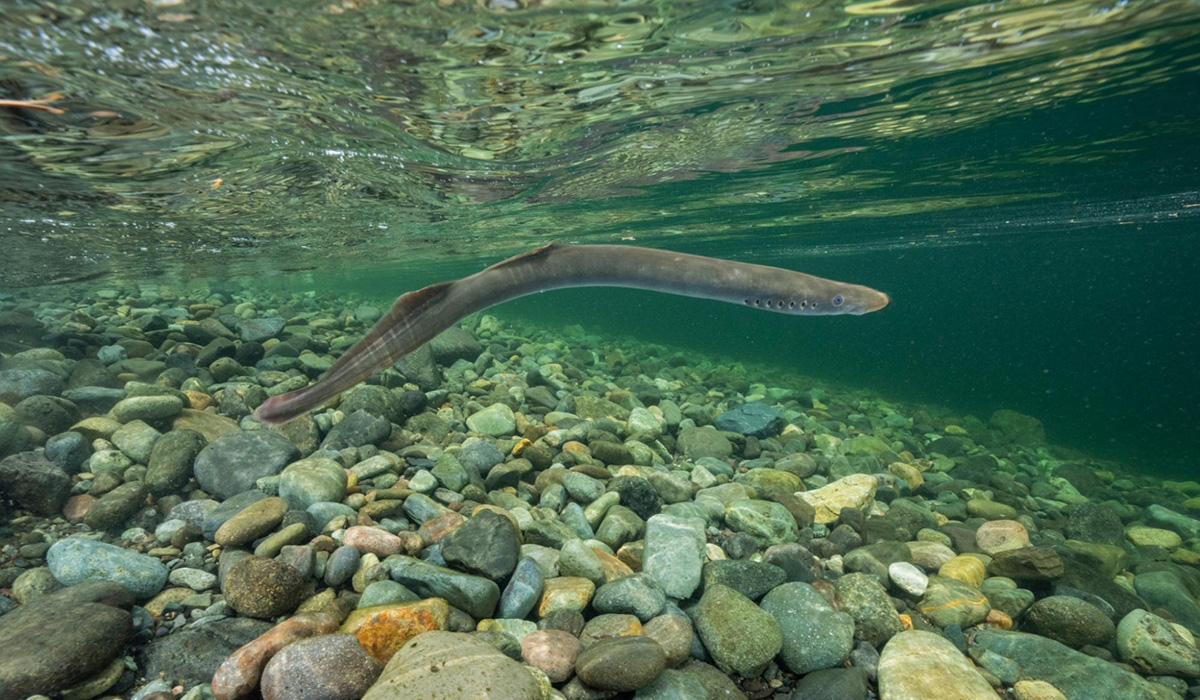
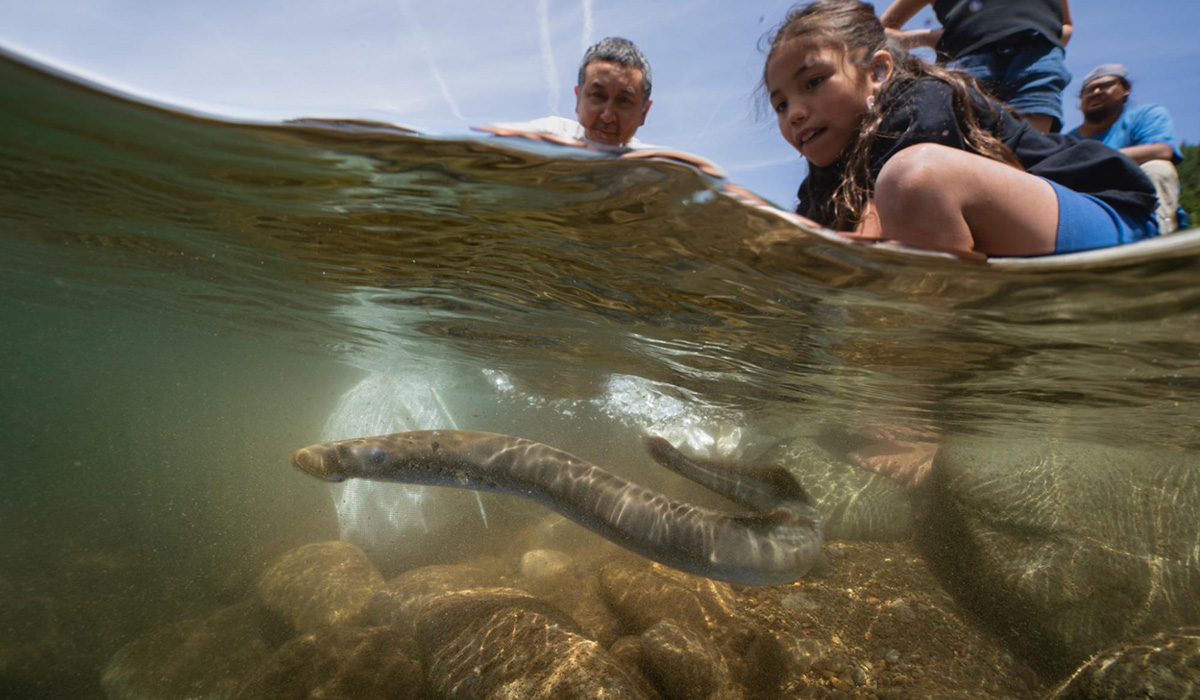
| | An adult Pacific lamprey in a rocky stream. © Conrad P. Gowell Photography |
| Seeing the Ancient: Photography Project Shines a New Light on Pacific Lamprey Pacific Lamprey have been navigating Pacific Northwest rivers for 450 million years—outlasting ice ages, mass extinctions, and the slow drift of continents. And yet, in rivers across the region, they are vanishing. Over the past year, Wild Fish Conservancy, in partnership with renowned underwater photographer David Herasimtchuk—and thanks to funding provided by Pacific Lamprey Conservation Initiative and Bonneville Power Administration—documented this ancient fish and the remarkable community of scientists, Tribal members, and conservationists working to bring them back. From adult lamprey climbing the basalt face of Willamette Falls to ammocoetes (larval stage) being hand-rescued from dewatered irrigation canals, the resulting portfolio captures a species at a crossroads—and the urgent work being done. Through this project, Wild Fish Conservancy provides powerful images to increase the effectiveness of partner outreach and education efforts that protect and restore lamprey and their ecosystems. The full photographic archive is now available online to partners, Tribal organizations, agencies, and individuals working on lamprey recovery—and to anyone moved by this ancient fish who wants to carry its story forward. |
| | 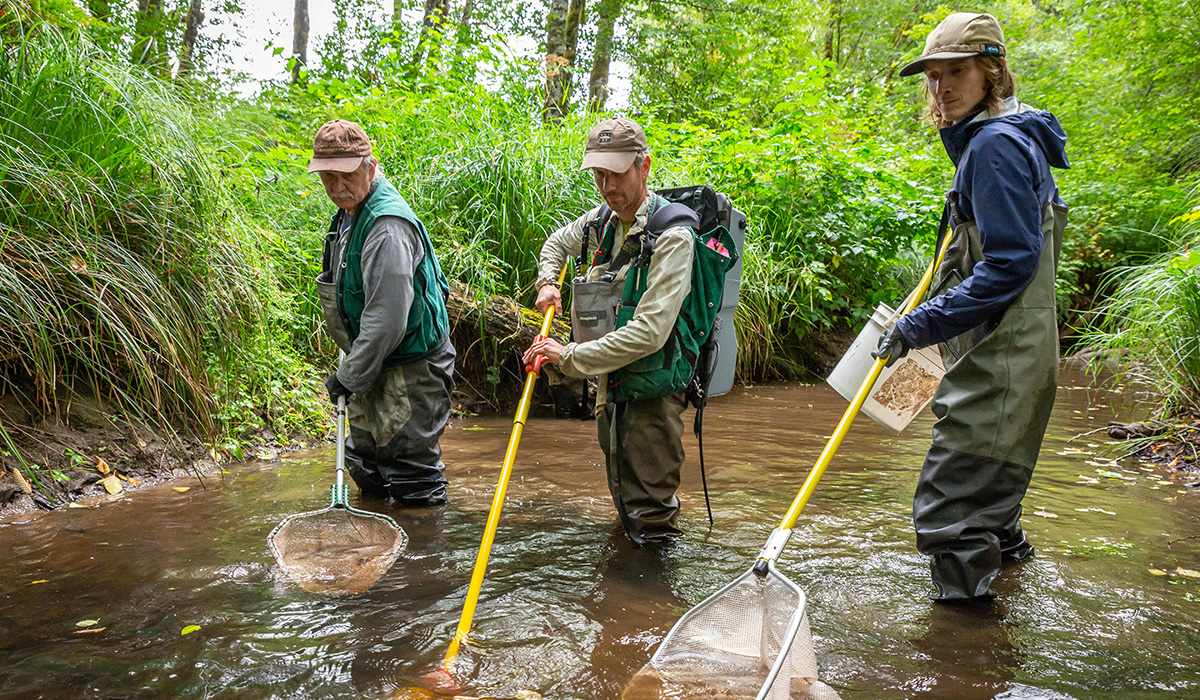 | Wild Fish Conservancy and Washington Department of Fish and Wildlife staff work to capture fish in a stream reach where BDAs will be constructed. |
| Building Like a Beaver: Habitat Restoration in the Chehalis Watershed In summer 2025, Wild Fish Conservancy partnered with the Washington Department of Fish and Wildlife and Thurston County Conservation District to install 36 beaver dam analogs—or BDAs—across three small tributaries to the Chehalis River. Built from wood posts and branches, BDAs are a habitat restoration technique designed to function like natural beaver dams, slowing streamflow and creating the ponds and pools that fish, amphibians, and waterfowl depend on. As summers grow hotter and drier due to climate change, these structures also play an increasingly important role in storing water and sustaining streamflow through the low-flow season—and ideally, real beavers eventually take over, maintaining and enhancing the structures over time. To document and understand how these streams respond to the addition of BDAs, Wild Fish Conservancy staff and partners established baseline conditions at each site a full year before construction. That monitoring will continue through 2026 and, ideally, beyond—building a long-term picture of how these streams evolve and what role real beavers eventually play. Read the full project update on our website for a closer look at the science behind this restoration effort, including a photo gallery of the project in action. |
| |
|
| | Thank You for Supporting Wild Fish This Spring It is with deep gratitude that we extend a heartfelt thank you to everyone who made a gift during our spring fundraiser and GiveBIG 2026. Your generosity directly fuels the science, advocacy, and legal work that wild fish depend on. If you missed your chance to give, it's never too late—every donation, at any time of year, makes a difference for wild fish and the ecosystems they call home. Thank you for all you make possible. |
|
|
| | | Wild Fish Conservancy News and Updates Learn about Wild Fish Conservancy's recent legal victories, policy advancements, and advocacy efforts—plus other important news and information from our organization. |
|
|
| |
|
| NOAA Fisheries Fails to Provide Federal Protections for Gulf of Alaska Chinook |
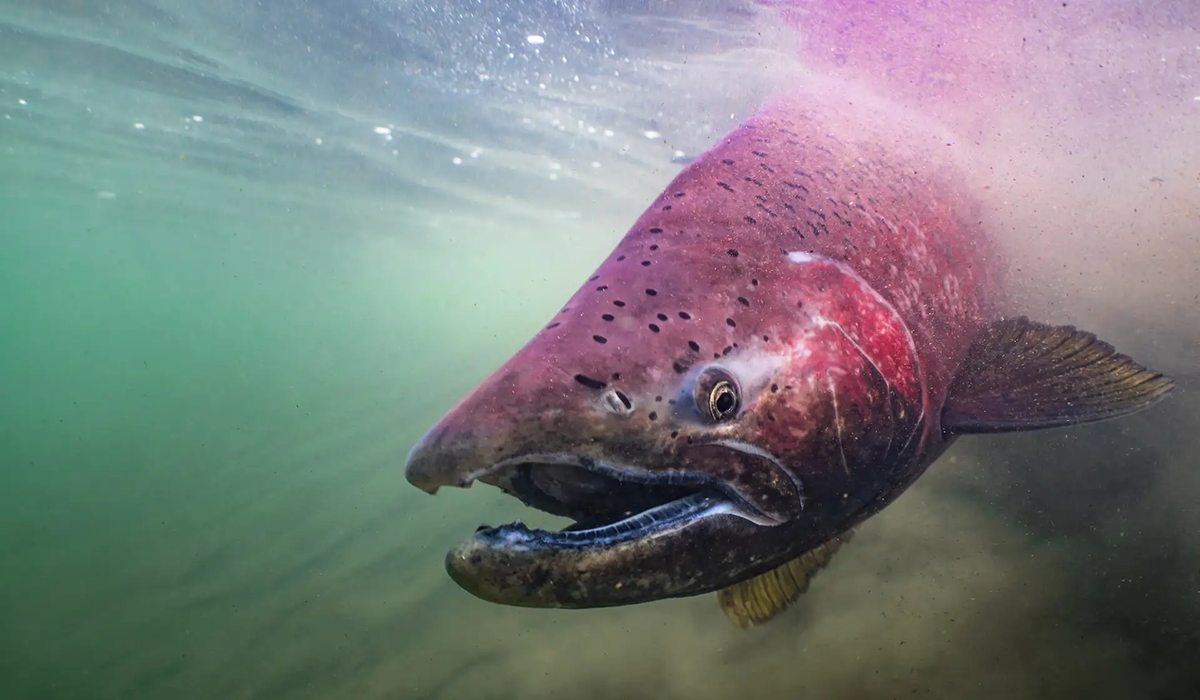
| Earlier this month, NOAA Fisheries released its long-overdue finding on Wild Fish Conservancy's petition to protect Gulf of Alaska Chinook salmon under the Endangered Species Act. Despite documented, widespread declines in Chinook abundance, size, and productivity across the region, the agency concluded that federal protections are "not warranted" at this time. As part of its assessment, NOAA Fisheries was required for the first time to formally designate Gulf of Alaska Chinook into Evolutionarily Significant Units—federally recognized conservation units that determine which populations qualify for Endangered Species Act protection—yet ultimately lumped all Gulf of Alaska Chinook into just three broad units spanning enormous geographic areas. At a time when the fate of imperiled Gulf of Alaska Chinook has never been more uncertain, the agency opted for minimal intervention—effectively maintaining the status quo and leaving a species on the brink without the protections and resources it urgently needs. While the finding falls short of the protections these fish desperately need, this federal recognition of distinct Gulf of Alaska Chinook populations is the beginning of a new phase of scientific review and an important first step toward greater scientific scrutiny, public transparency, and future accountability. Wild Fish Conservancy is conducting a thorough scientific and legal review of the finding and will share a full update once that review is complete. |
| | | Protect Wild Fish—Become a Member Wild Fish Conservancy members do more than support our work—they make it possible. Under laws like the Endangered Species Act and the Clean Water Act, organizations can only bring legal action on behalf of people directly affected by environmental harm. Our members provide that standing. Since 1989, that people-powered legal authority has driven more than 100 cases on behalf of wild fish, clean water, and the communities that depend on healthy ecosystems. Join or renew your membership today. Become a Member ► |
| |
|
| | 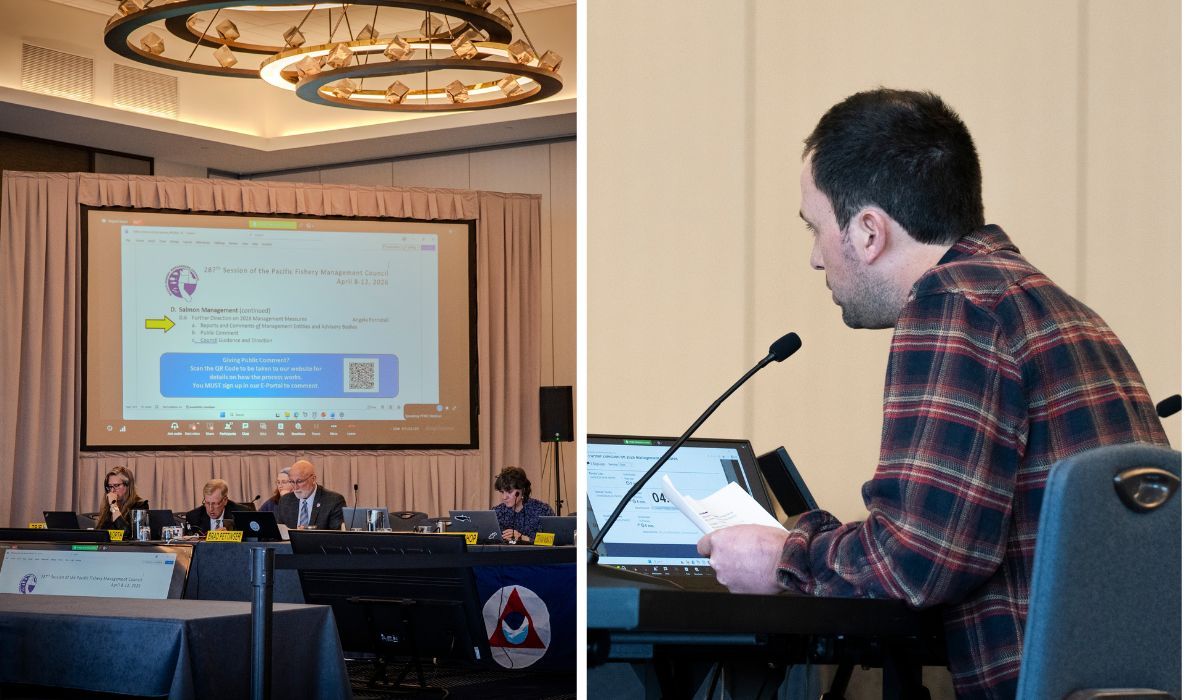 | Wild Fish Conservancy biologist Adrian Tuohy (right) shares oral testimony before the Pacific Fishery Management Council (left) during the Council's 287th Session in Portland, Oregon. |
| Our Salmon Need Your Voice: An Update from the Let Our Salmon Come Home Campaign Last month, the Let Our Salmon Come Home movement took its campaign to the Pacific Fishery Management Council's 287th Session in Portland, Oregon—and decision-makers took notice. Prior to the Council convening in person, more than 60 individuals submitted written testimony in support of the campaign's vision—urging the Council to reform unsustainable ocean-based fisheries and allow our salmon to return to the local watersheds, communities, and ecosystems that depend on them. Members of the Let Our Salmon Come Home campaign team attended the session in person—providing oral testimony before the Council; participating in an adjacent West Coast Recreational Fisheries Roundtable; and engaging directly with representatives from NOAA Fisheries, the Washington Department of Fish and Wildlife, the Oregon Department of Fish and Wildlife, and members of the recreational fishing community. Let Our Salmon Come Home made an impression, with Council members engaging with the campaign team beyond the formal session to ask questions and learn more. This is what momentum looks like—and we need your help to keep it going. Decision-makers are listening, and the more voices we add to this movement, the harder it becomes to ignore the coastwide call to Let Our Salmon Come Home. Two upcoming council sessions are open for public comment now—with deadlines closing on May 29 and June 20. Access sample comments and step-by-step instructions on the Let Our Salmon Come Home website to submit your testimony in just minutes. Don't miss your chance to add your voice! |
| | |
|
| | Featured image © Conrad P. Gowell Photography Wild Fish Conservancy
PO Box 402 | Duvall, Washington 98019
425.788.1167 | [email protected] |
| | |
|
| |
|
|