| | |  | | Wild Fish Runs The Wild Fish Conservancy Newsletter
March 2026 |
| With the arrival of spring begins another chapter in Wild Fish Conservancy's water typing work across Washington state streams. This season, we mark 30 years of that work—a milestone we're proud to celebrate alongside the welcome addition of new staff to our surveying team and the adoption of a long-awaited permanent rule to the state's water typing guidance. Read on for a progress report on some of our water typing efforts throughout the state, plus news from across our organization—including updates on our advocacy work and how to engage with our new coastwide campaign. |
| | |
|
| Field Notes: Updates on Our Current Projects Discover how Wild Fish Conservancy staff are working in the field to safeguard wild fish and their habitats. Here’s a look at just a few of the projects we’re focused on right now. |
|
|
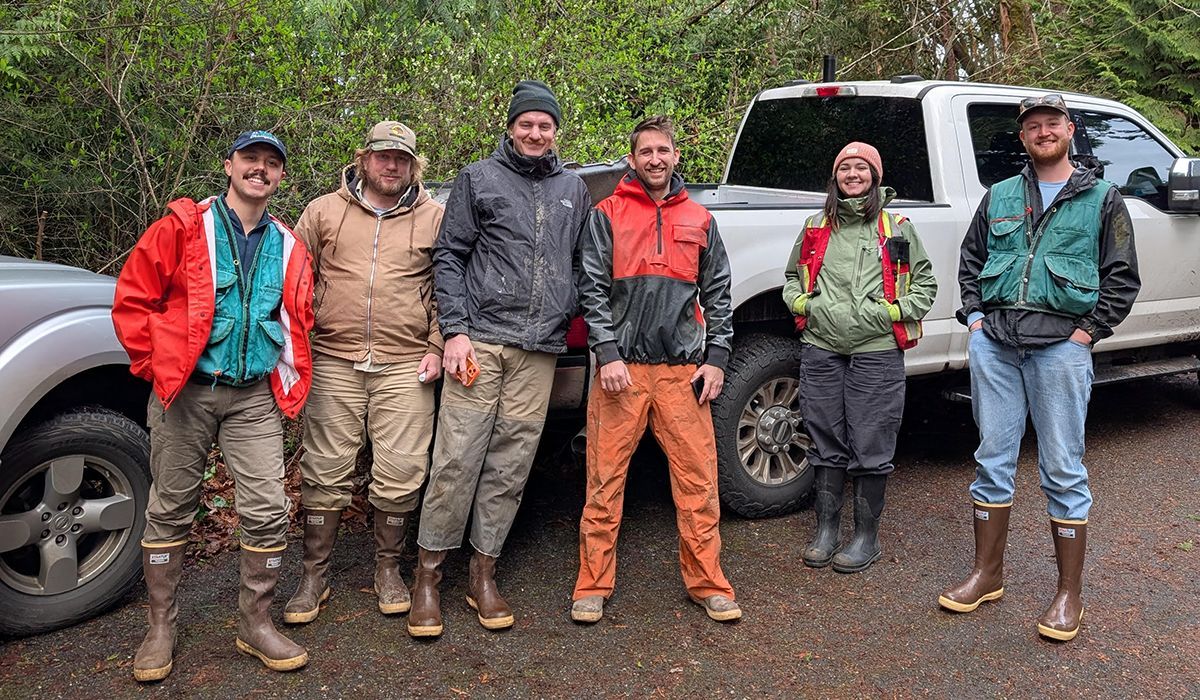
| | Wild Fish Conservancy field surveyors during a recent two-day training to review the updated state water typing rule and guidance. |
| State Water Typing Rules Get an Overdue Refresh What determines the level of protection a stream gets in Washington state? A classification called water typing. But despite the critical role water typing plays in protecting fish habitat in Washington, for decades that process was governed by a temporary rule and inaccurate maps. After more than 25 years, a permanent rule finally took effect in March, informed in part by years of Wild Fish Conservancy field work and technical expertise. Since 2015, Wild Fish Conservancy has provided technical support to the Forest and Fish Conservation Caucus's effort to replace the state's interim water typing rule and guidance with more scientifically defensible permanent standards. Developing and adopting a new rule was a lengthy and contentious process, but in 2025 the Forest Practices Board formally established a permanent rule and guidance that took effect this March. Right now, Wild Fish Conservancy is putting the new rule and guidance to the test as our field staff begins water typing surveys in Kitsap Peninsula watersheds. With thirty years of water typing experience and over 10,000 stream reaches classified across Washington, Wild Fish Conservancy looks forward to testing the new rule and guidance in the field—and providing feedback to the state once the season concludes. Visit our website to learn more about the new rule and Wild Fish Conservancy's water typing work. |
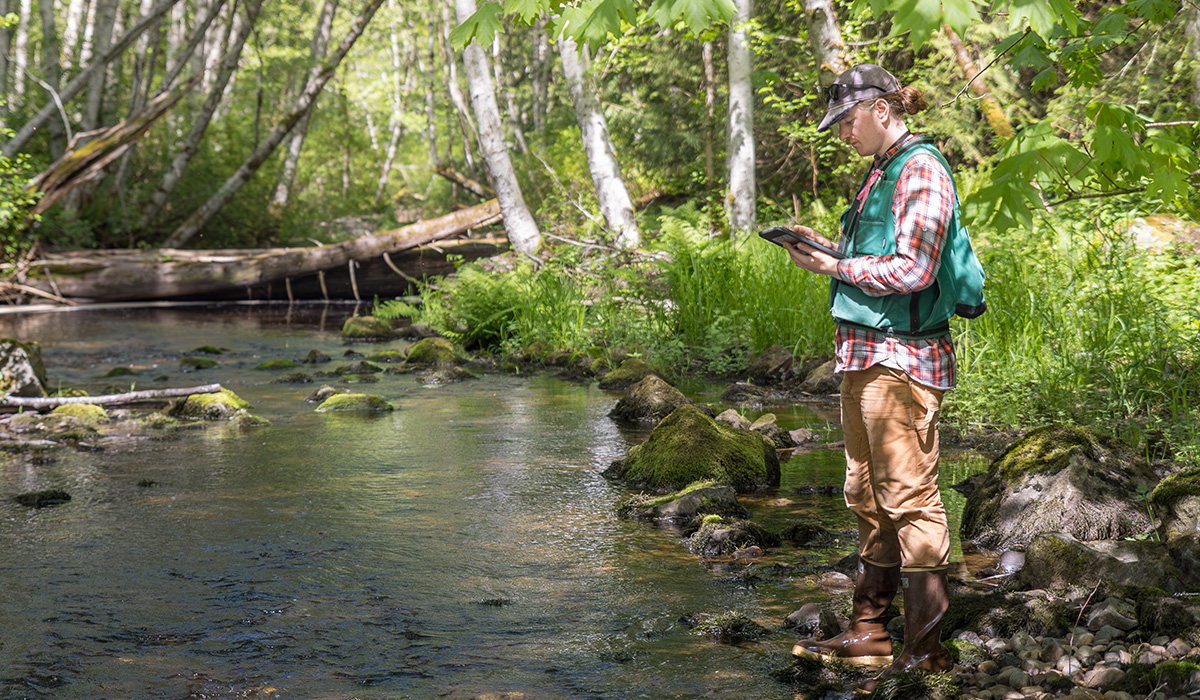
| | 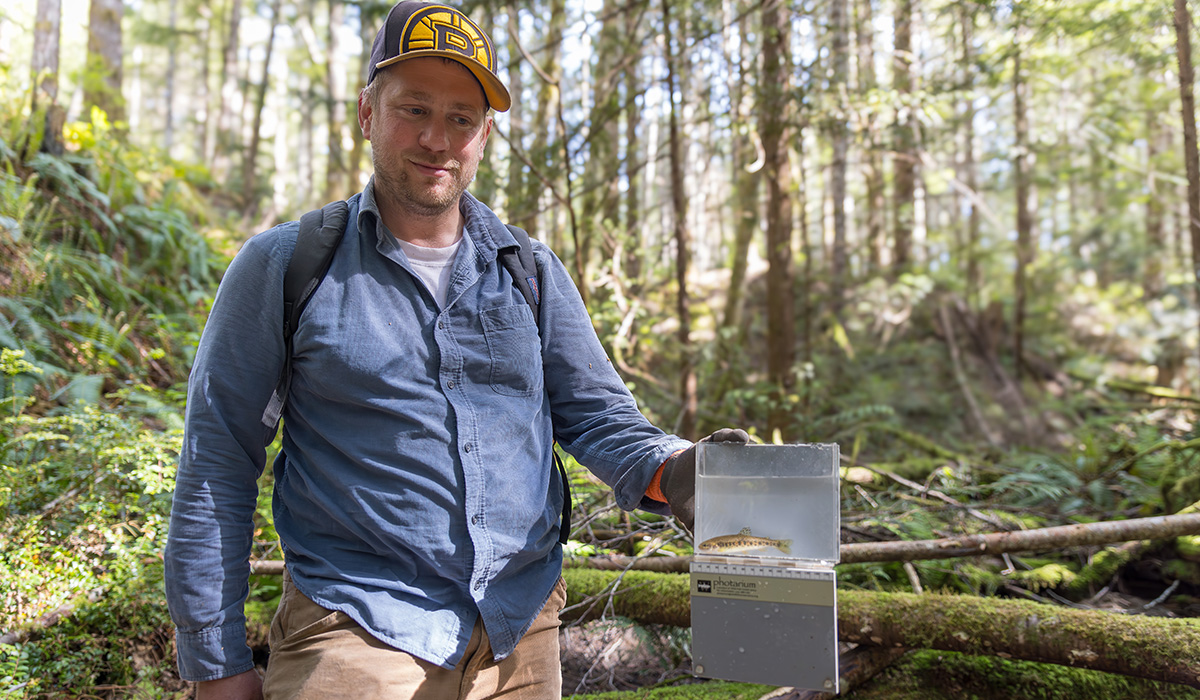 | Wild Fish Conservancy Field Technician Joe Verelli documents cutthroat trout presence in a small tributary to Big Beef Creek on the Kitsap Peninsula. Wild Fish Conservancy photographs captured fish on-site using a Photarium, a versatile tool that we developed for water typing surveys and available for purchase in five sizes on our website. |
| A Decade of Water Typing in Kitsap County Continues with New Conservation Goal Wild Fish Conservancy's water typing work in Kitsap County stretches back to 2011, making it one of our longest-running county-level field efforts in the state. In that time, our biologists have surveyed hundreds of streams across the Kitsap Peninsula, building a detailed picture of where streams are—increasing the likelihood that they'll receive the protection they warrant under existing regulations. For the past three years, this work has operated under the Kitsap Natural Resource Asset Management Program (KNRAMP), a county-led initiative to develop a more comprehensive and accurate inventory of Kitsap County's natural resources. Under KNRAMP, our surveys have focused on eight watersheds selected in partnership with Kitsap County, the Port Gamble S’Klallam Tribe, and Suquamish Tribe, further narrowing the gap between what the maps show and what is actually on the ground. Building on more than a decade of fieldwork in Kitsap County, a Recreation and Conservation Office grant is enabling us to launch a new water typing effort with a focused conservation goal: protecting the watersheds that support Endangered Species Act-listed steelhead. Steelhead are among the most imperiled salmonids in the Pacific Northwest, and the Kitsap Peninsula supports small populations that depend on cold, well-connected stream networks. By prioritizing surveys in watersheds with documented or potential steelhead use, we can direct our efforts where they will have the greatest impact—ensuring the streams steelhead need are accurately classified and fully protected. Together, these grants allow us to continue and deepen this work—collecting data that are essential to effective county planning, permitting decisions, and the regulatory record—making it harder to overlook or fail to protect critical streams. |
|
|
| | Support the Work that Protects Wild Fish For thirty years, Wild Fish Conservancy staff have surveyed and ground-truthed thousands of small streams throughout the Northwest. Help support the next thirty years of water typing in the region with a donation today! Your gift supports boots-on-the-ground work to ensure critical areas receive the protection they need and that accurate data inform habitat protection and restoration planning decisions. |
|
|
| | | 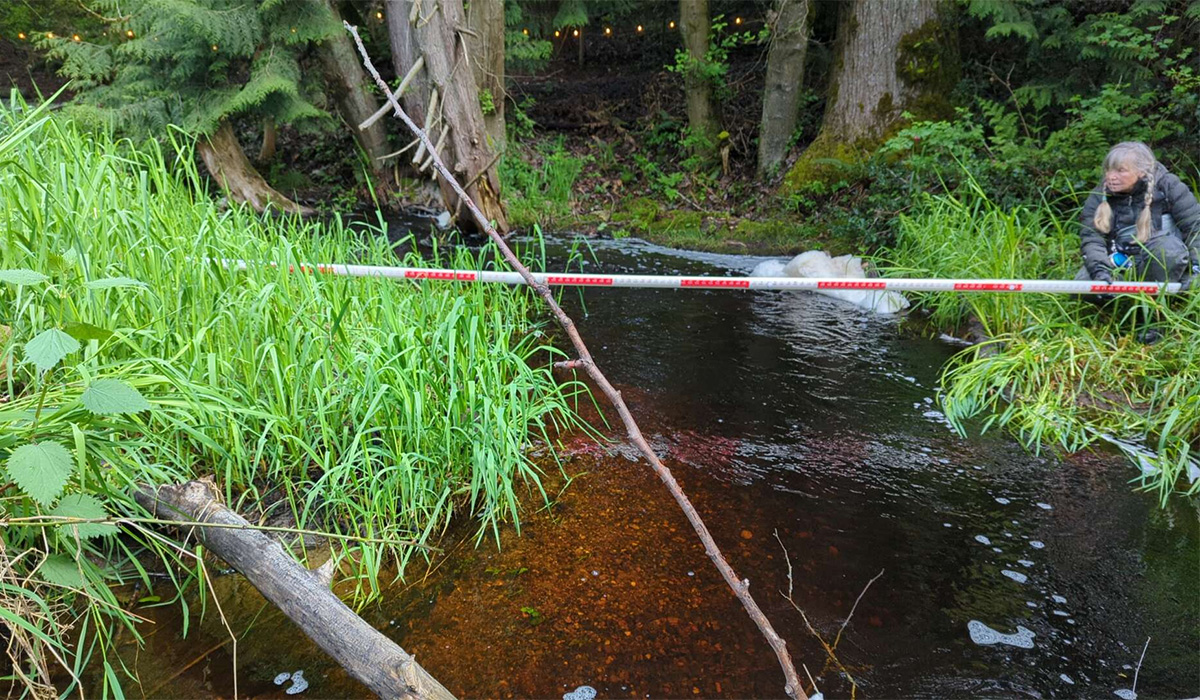 | Wild Fish Conservancy Project Manager and Field Biologist Mary Lou White surveys Catherine Creek. |
| Pilchuck Water Typing Project Uncovers Miles of Unmapped Fish Habitat Water typing is essential for ensuring regulatory maps accurately reflect conditions on the ground—and few examples illustrate the importance of this work as clearly as Wild Fish Conservancy's recent water typing efforts in Snohomish County's Pilchuck River Watershed. During the 2023–2025 field seasons, Wild Fish Conservancy staff conducted water type assessments throughout Catherine Creek, a tributary to the Pilchuck River. Historically, Wild Fish Conservancy’s water type assessments have shown that the state's regulatory maps often misclassify or omit fish habitat, leaving them vulnerable to impacts from land development or forest activities. Results of the Catherine Creek study area are striking. Wild Fish Conservancy uncovered roughly 20 miles of fish habitat that had not previously appeared on the Department of Natural Resources' regulatory water type map. As housing development and land use intensify across Snohomish County, the consequences of inaccurate maps become increasingly significant. Streams that are not mapped are unlikely to be protected—and once lost to development, that habitat is nearly impossible to recover. When development or forest practices happen too close to fish habitat, the fish lose. Land use can degrade water quality, habitat quality, and the magnitude and timing of streamflows. Accurate water typing data ensures that critical fish-bearing streams are accounted for before planning and permitting decisions are made, giving regulators, planners, and landowners the information they need to act responsibly. |
|
|
| | Wild Fish Conservancy News and Updates Learn about Wild Fish Conservancy's recent legal victories, policy advancements, and advocacy efforts—plus other important news and information from our organization. |
|
|
| |
|
| Federal Court Sets Deadline on Overdue Alaska Chinook Endangered Species Act Decision |
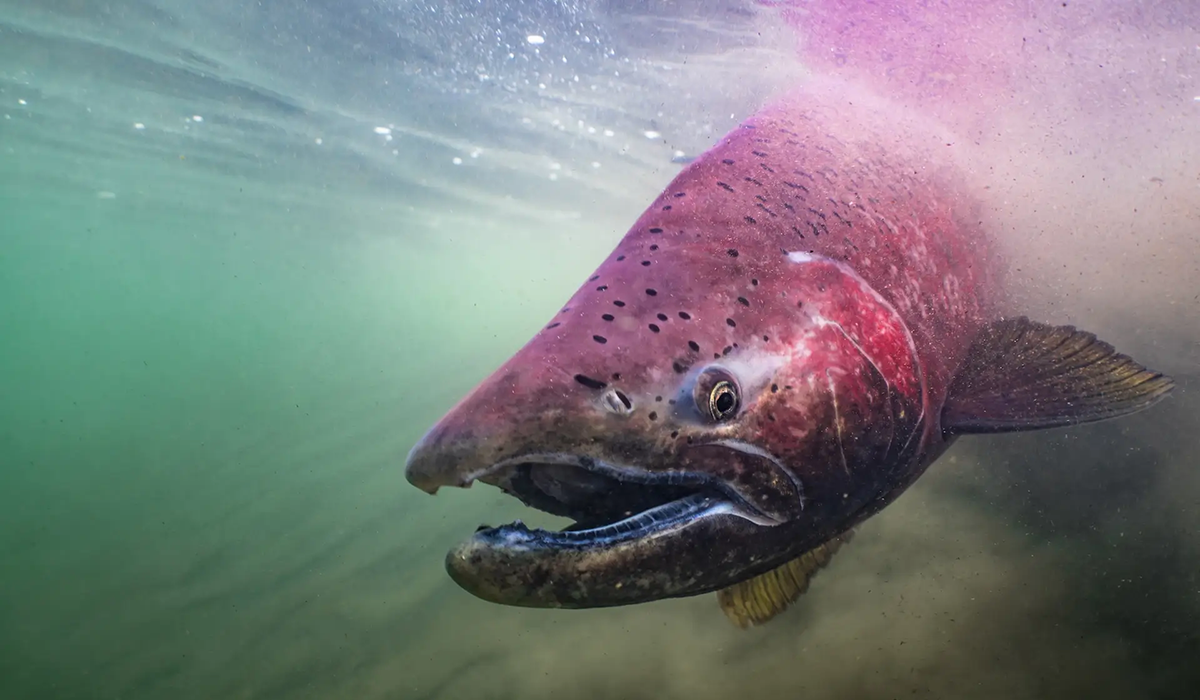
| Wild Fish Conservancy has reached a settlement requiring NOAA Fisheries to decide by May 13, 2026, whether Gulf of Alaska Chinook salmon warrant protection under the Endangered Species Act. Wild Fish Conservancy filed suit in May 2025 after the agency missed its statutory deadline to act on a petition we submitted in January 2024. The urgency is hard to overstate. Even before the ice melted from the rivers, state managers had to preemptively close or severely restrict king salmon fishing across the Gulf of Alaska and Cook Inlet. Despite the State of Alaska's continued opposition to federal Endangered Species Act protections, state biologists have publicly acknowledged "historic low escapements" and a protracted period of poor productivity. A federal listing process, if warranted, would require a transparent recovery plan developed with input from Tribes, scientists, and affected communities—and would mandate that harvest be scientifically managed rather than subject to the sweeping emergency closures that have become an increasingly devastating new normal for coastal Alaskans. |
| | |
|
|  | Join the Movement to Let Our Salmon Come Home From California to Alaska, the public's massive investment in dam removal, habitat restoration, and salmon recovery is being undermined by unsustainable ocean fishing as salmon populations decline toward extinction, orca whales starve, and communities that depend on salmon struggle to cope. Now is the time to rise up together in a powerful coastwide movement to call on policymakers to curtail unsustainable ocean fishing and Let Our Salmon Come Home. Join others across the Pacific Coast by signing up and strengthening the coastwide movement working to bring our salmon home to the local watersheds, communities, and ecosystems that depend on them. |
| | |
|
| 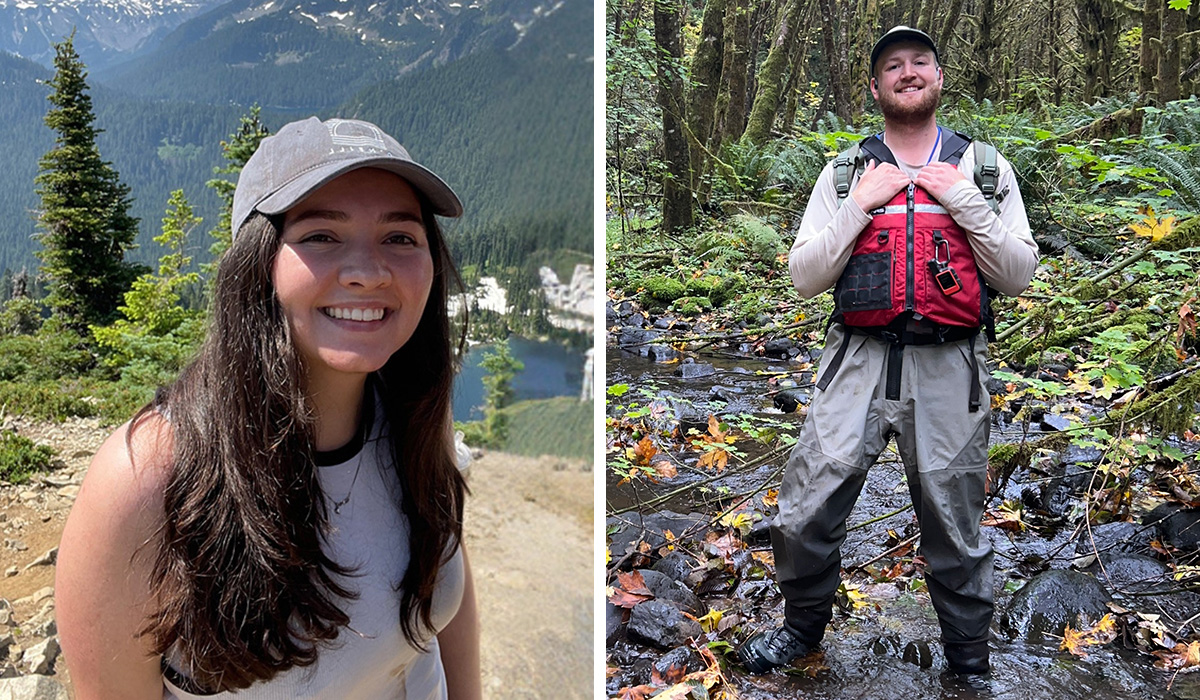 | Wild Fish Conservancy welcomes Mady Rangel (left) and Will Plomer (right) to its team of field surveyors. |
| Wild Fish Conservancy Welcomes Two New Staff to Its Field Surveying Team With the 2026 field season underway, Wild Fish Conservancy is excited to welcome two new staff to its team of field surveyors: Mady Rangel and Will Plomer. Both Mady and Will join the team as fisheries field technicians, and each bring unique backgrounds and expertise to their roles. Mady, who holds a bachelor's degree in biology, comes to Wild Fish Conservancy with a robust fieldwork background in conservation—and enjoys supporting salmonid conservation in her home state. In her role, Madelyn contributes to water typing efforts across the Kitsap Peninsula and conducts fish passage assessments. With experience spanning state agencies, consultants, and Tribal nations across the western United States, Will brings a broad fisheries management background—including a focus in geographic information systems (GIS)—to his new role with Wild Fish Conservancy. He holds a bachelor’s degree in Ecosystem Science and Sustainability from Colorado State University. You can learn more about Mady and Will—as well as Garret Engelke, a fisheries field technician we introduced in our February newsletter—on our website. |
| |
|
| | Wild Fish Conservancy
PO Box 402 | Duvall, Washington 98019
425.788.1167 | [email protected] |
| | |
|
| |
|
|