| | |  | | Wild Fish Runs The Wild Fish Conservancy Newsletter
January 2026 |
| As a new year begins, we're looking back on everything you helped make possible in 2025. Because of your enduring support, Washington became the first and only place in the world to completely remove and permanently ban commercial net pen aquaculture, the lower Columbia River is advancing a scalable model for sustainable harvest with the basin's first fish trap fishery in nearly a century, and our legal work continues to drive lasting change for wild fish and the ecosystems they depend on. In this edition of Wild Fish Runs, you'll find more examples of what's possible for wild fish when stewardship, partnership, and science lead the way—along with an opportunity to support one of our most ambitious efforts yet: an international campaign spanning California to Alaska to change how we fish in the ocean and Let Our Salmon Come Home. We can't wait to see what we achieve together for wild fish this year. |
| | |
|
| Field Notes: Updates on Our Current Projects Discover how Wild Fish Conservancy staff are working in the field to safeguard wild fish and their habitats. Here’s a look at just a few of the projects we’re focused on right now. |
|
|
| 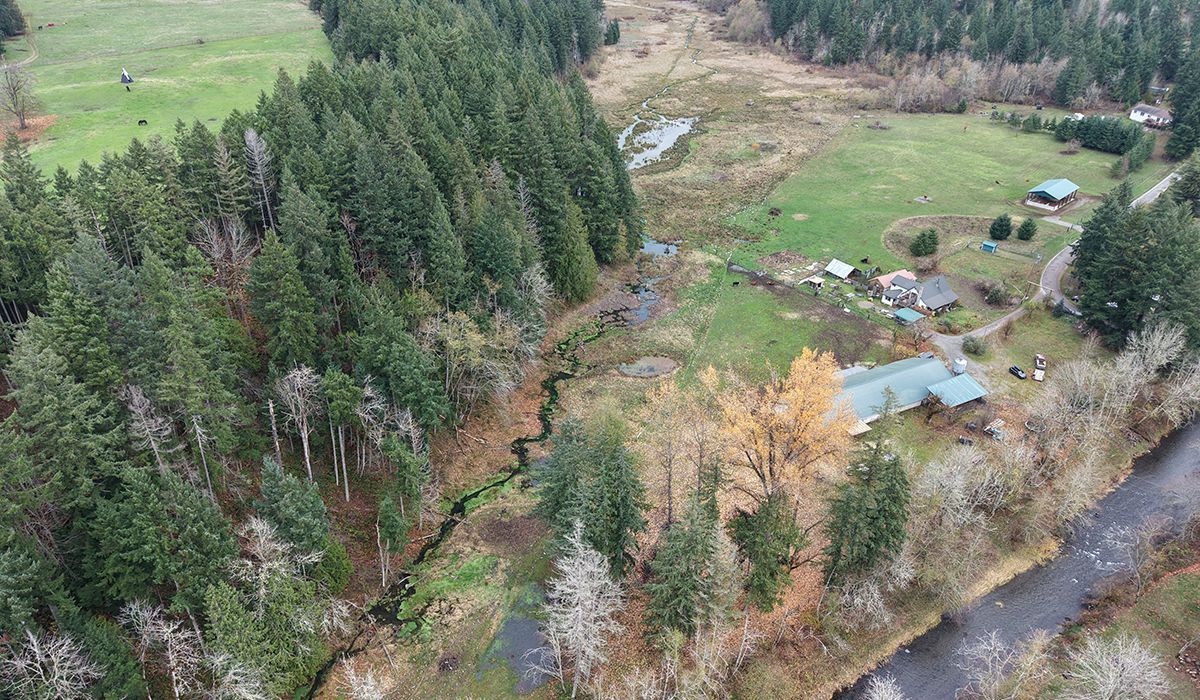 | Aerial view of Meyer Creek and Meyer Creek Family Farm in Yelm, Washington. |
| A Multi-Disciplinary Model for Healthy Streams and Sustainable Farms While surveying tributaries to the Deschutes River in Washington state's Thurston County to improve state and local government regulatory maps in 2018, Wild Fish Conservancy (WFC) field biologist Frank Staller met Mr. Meyer—a cattle farmer with a stream that needed help. Meyer Creek is a cold, spring-fed stream that runs through Meyer Creek Family Farm, a 22-acre working beef cattle farm located in Yelm, Washington. The creek joins the upper Deschutes River in an area where the mainstem Deschutes experiences dangerously high summer water temperatures for trout and salmon, and where off-channel rearing habitat is limited.
Mr. Meyer was interested in improving efficiencies on his farm while also remaining enthusiastic about his stream and the many fish, beavers, waterfowl, and other wildlife that called it home. After assessing the stream habitat conditions, including water temperatures and fish species composition, WFC built a project team in partnership with Thurston Conservation District (TCD) and designed a project to remove three derelict culverts and add large wood in Meyer Creek. Thurston Conservation District developed a complementary farm best management plan that included stream fencing, planting vegetation to shade and stabilize the creek, and improving pasture and cattle management. Together, these efforts resulted in a comprehensive restoration project that benefited both the farm and the fish. Funding for the project came from the Salmon Recovery Funding Board and the Washington State Conservation Commission.
Effective stream restoration and protection projects require a holistic ecosystem approach. Our partnership with TCD provided just that—allowing us to improve instream habitat conditions and address the unintended impacts that the farm was having on the stream. This project is a model of how voluntary stewardship and a multi-disciplinary approach can protect and improve ecosystem functions while also enhancing the sustainability of local farm businesses. We hope to replicate this model elsewhere in the abundant Pacific Northwest farmlands, where there is no shortage of similar needs and opportunities. |
| |
|
| 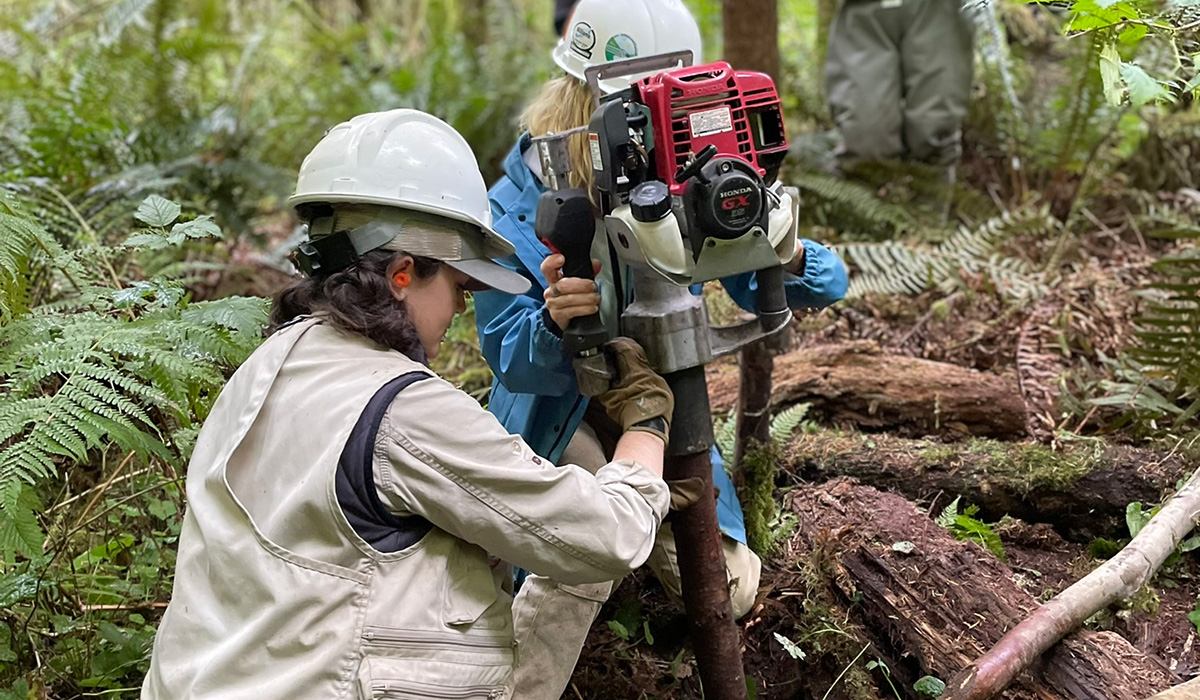 | Wild Fish Conservancy Biologist Paige Hosman and a project partner installing a Beaver Dam Analog. |
| Explore Our NEW Snoqualmie Beaver Dam Analog StoryMap In 2024, Wild Fish Conservancy partnered with the Wilderness Awareness School in Duvall, Washington, to create wetland habitats on the school’s property using Beaver Dam Analogs (BDAs)—a low-tech restoration technique that mimics natural beaver processes, supporting the ecological and hydraulic benefits that provide and sustain vital stream habitats for salmon, amphibians, and waterfowl in areas where beavers have been displaced. We invite you to explore our NEW, interactive StoryMap for an in-depth look at our Snoqualmie Beaver Dam Analog Development Project—and to learn if BDAs could support restoration on your property! |
| | |
|
| 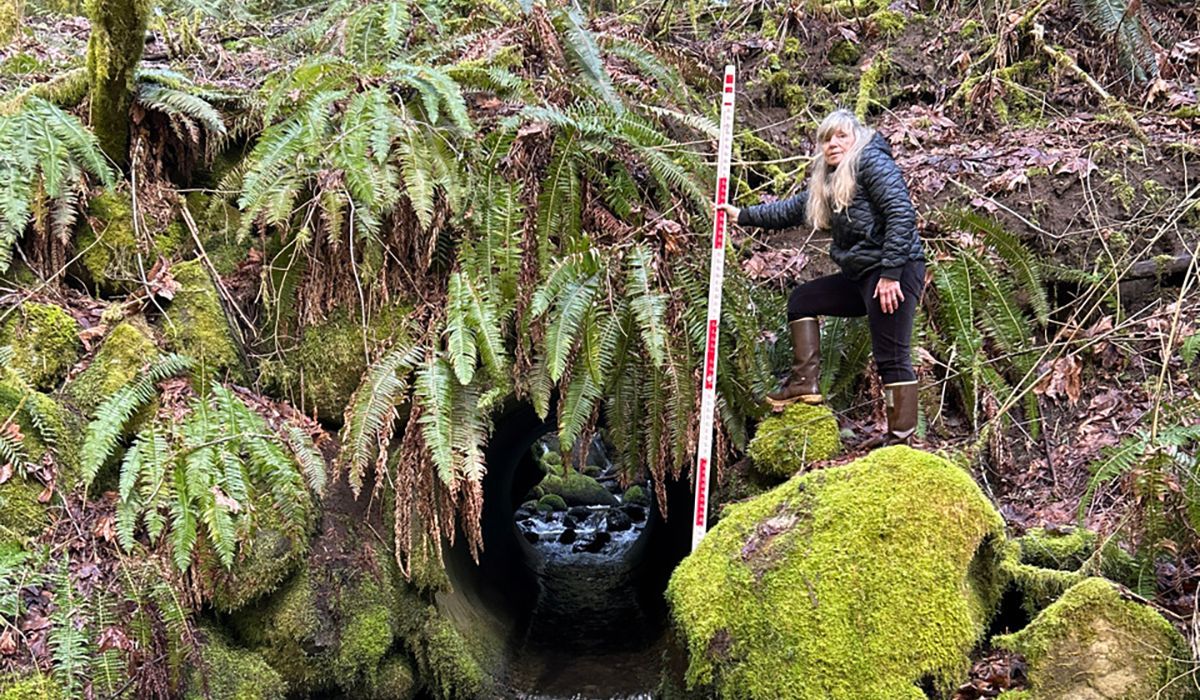 | Wild Fish Conservancy Project Manager and Field Biologist Mary Lou White performing a fish passage assessment. |
| Restoring Fish Passage in the Snoqualmie Basin: Phase 1 Complete In 2022, Wild Fish Conservancy (WFC) began assessing fish passage and natural barriers on private lands in prioritized tributaries within the Snoqualmie River watershed, located in eastern King County, approximately 40 mile east of Seattle, Washington. As Phase 1 of our Fish Passage Assessment Supplementation Project concludes, we want to extend a big THANK YOU to the landowners who allowed us access to their properties—your partnership makes this work possible. By providing access, you’ve enabled us to assess over 170 potential fish passage barrier sites over the past three years—thank you! Addressing fish passage barriers is a win-win for salmon and streams, restoring natural processes that support all salmonids while tackling high-priority Endangered Species Act (ESA)-listed salmon recovery concerns including climate change, high water temperatures, and habitat connectivity. By removing or replacing fish passage barriers, we reconnect fish to the spawning and rearing habitats they historically used, while also reducing flooding, lowering stream temperatures, and addressing water quality issues. Improving fish passage at culverts remains one of the most effective and cost-efficient ways to restore watershed health. Through Phase 1 of WFC's Fish Passage Assessment Supplementation Project, which was made possible by funds awarded to us by Cooperative Watershed Management, we've coordinated with King County and Washington Department of Fish and Wildlife (WDFW) to collect data that can be input into WDFW’s centralized fish passage database. This science-based strategy ensures that ESA-listed salmon restoration and future policies that benefit wild fish are guided using the best available science. This year, we'll be expanding this systemic fish passage assessment and inventory with Phase II of our Fish Passage Supplementation Project in the King County portion of the Snoqualmie basin, concentrating our efforts primarily in the Patterson, Raging, and Griffin Creek sub-basins—before transitioning to the Tolt basin. If you receive a permission request from us, please support this work by responding and letting us know if we can conduct an assessment on your property. Thank you! |
|
|
| | Start the New Year as a Wild Fish Conservancy Member! Behind every Wild Fish Conservancy project and policy win are the people who make it possible—our members. By joining or renewing your support, you fuel science-based policy and safeguard the future of wild fish.
Whether you’re a longtime supporter, a returning member, or joining for the first time, your support matters. Become a member or renew your support today—and start the new year standing up for wild fish and the ecosystems they depend on! |
| | |
|
|  | Support a Pivotal Moment for Wild Fish: Join the Movement to Let Our Salmon Come Home |
|
|
| Last year, your support made history with Washington's permanent ban on commercial net pen aquaculture in all state marine waters, the launch of the Columbia River's first commercial fish trap fishery in nearly a century, and the advancement of bold litigation that builds on decades of legal actions and victories ensuring that the best available science guides how we protect imperiled wild fish and their ecosystems. This year, we're building on that momentum and taking on one of our most ambitious initiative to date: Let Our Salmon Come Home—an international campaign to unite and empower communities across the West Coast in a first-of-its-kind movement working collectively to transition away from unsustainable ocean fisheries and redefine what's possible for salmon, Southern Resident killer whales, and coastal communities. The urgency of this campaign comes at a time when communities across the Pacific Coast are rising up for the first time ever in demand of harvest reforms, and fisheries managers and policy makers are renegotiating a harvest agreement that will set the rules for ocean salmon fishing for the next decade or more. Through this campaign, we can send a clear, unified message to fisheries managers at this crucial time that we must change the system that has been harming wild salmon, orcas, and coastal communities for generations and finally Let Our Salmon Come Home. As we launch this ambitious campaign, your support is more important than ever. If you're able, make a gift to help secure a future where wild salmon, orcas, and communities across the West Coast can all thrive. |
| | |
|
|
|
| Wild Fish Conservancy News and Updates Learn about Wild Fish Conservancy's recent legal victories, policy advancements, and advocacy efforts—plus other important news and information from our organization. |
|
|
| 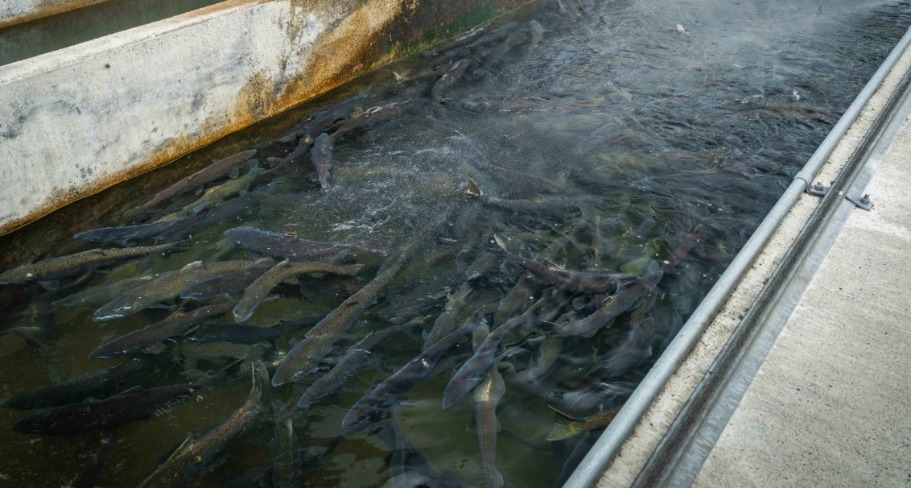 | Kalama Falls Fish Hatchery (Kalama, Washington). Photo courtesy of Wild Fish Conservancy. |
| Environmental Advocates Sue Again to Protect Wild Salmon, Steelhead, and Orcas, as Feds Concede New Management Plan Is Inadequate Wild Fish Conservancy (WFC) and The Conservation Angler (TCA) have filed a new federal lawsuit against NOAA Fisheries for its failure to protect wild salmon, steelhead, and orcas from repeated Endangered Species Act (ESA) violations and ongoing harm caused by Columbia River hatcheries below Bonneville Dam. Under the ESA, NOAA is required to issue a Biological Opinion (BiOp) for any action it funds that may affect listed species, determining the extent of harm and ensuring the funded action will not push species closer to extinction. Our new lawsuit challenges NOAA's December 2024 BiOp that attempts to justify continued Mitchell Act hatchery operations despite clear legal and scientific flaws. In a stunning last-minute admission on the eve of our filing, NOAA informed WFC and TCA that its 2024 BiOp requires "clarification" and must be reissued. Their acknowledgement underscores the urgency of this legal action, as NOAA has for more than a decade allowed harmful hatchery operations to continue under inadequate ESA reviews while spending tens of millions on programs it knows are operating without a valid protective plan. Read our full press release on our website to learn more about our lawsuit, NOAA's flawed 2024 BiOp, and other actions that have led to this point. |
| | |
|
| Do You Have a Legal or Policy Concern We often hear from citizens worried that environmental laws aren’t being followed. When that happens, we work with legal teams to evaluate whether action needs to be taken and, if warranted, use the court system to enforce laws like the Clean Water Act, Endangered Species Act, and other laws designed to protect wild fish. You can share your legal or policy concerns with us through our online form. |
| |
|
| | Wild Fish Conservancy
PO Box 402 | Duvall, Washington 98019
425.788.1167 | [email protected] |
| | |
|
| |
|
|