| | |  | | Wild Fish Runs The Wild Fish Conservancy Newsletter
August 2026 |
| August is one of Wild Fish Conservancy's busiest months—and this edition of Wild Fish Runs shows why. Right now, our field crews are working in watersheds across the region, and in this newsletter, we take a look at just a couple of those efforts—including restoration and assessment work underway in the Deschutes Watershed and on the Snoqualmie River. Beyond the field, the work behind the scenes continues, and this month we pull back the curtain on the dense paper trail that drives Northwest fisheries decisions—and what it takes to read the record. And with consequential decisions about the future of Pacific salmon on the horizon this fall, we share two ways you can raise your voice right now. |
| | |
|
| Field Notes: Updates on Our Current Projects Discover how Wild Fish Conservancy staff are working in the field to safeguard wild fish and their habitats. Here’s a look at just some of the projects we’re focused on right now. |
|
|
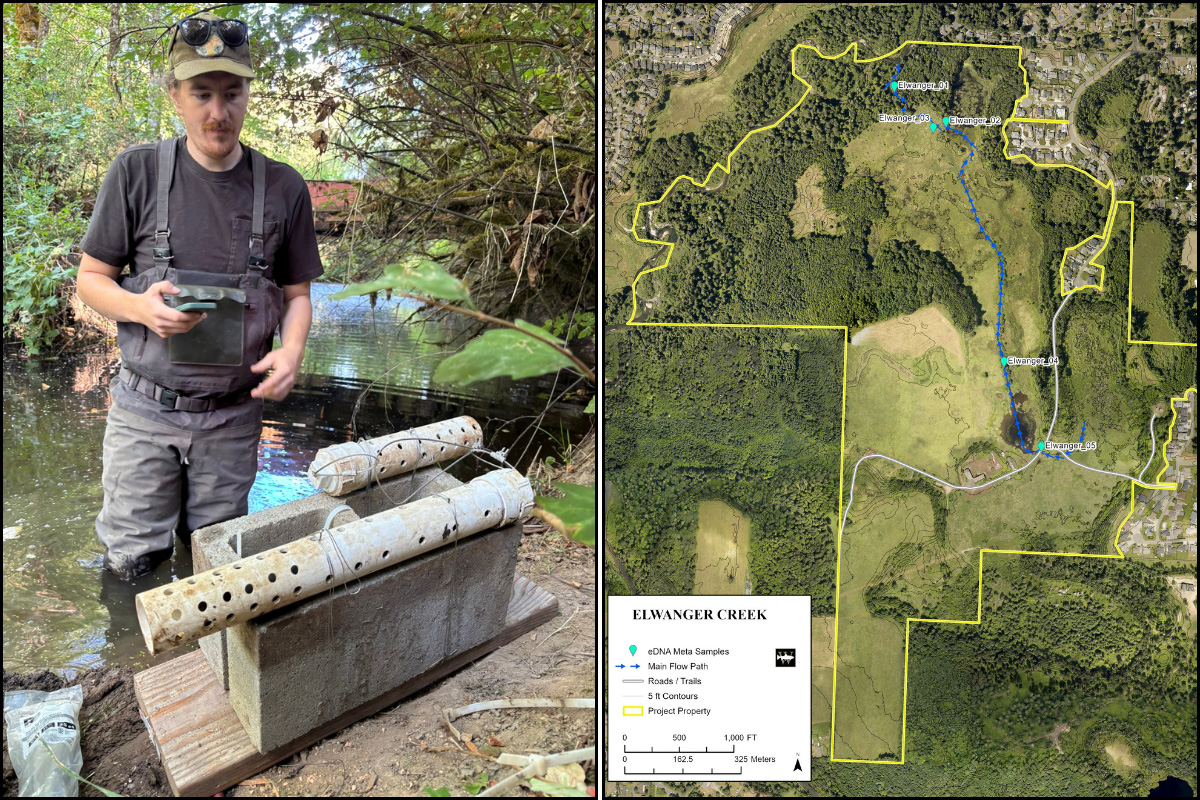
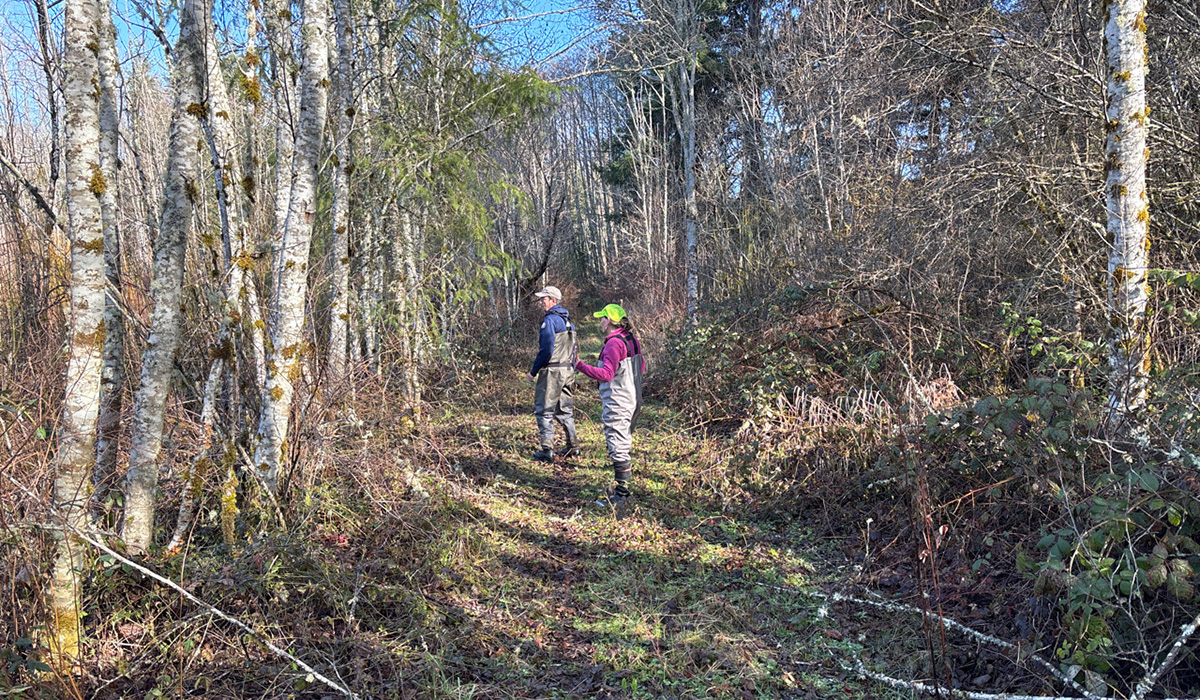
| | Left: Wild Fish Conservancy Field Biologist Blake Joplin deploying instruments to collect hourly temperature, dissolved oxygen, and pH data in lower Elwanger Creek. Right: Elwanger Creek flows north through the Deschutes River Preserve, joining the Deschutes River that flows north to Olympia and into Puget Sound. |
| From Dairy Farm to Fish Habitat: Restoration Work at Elwanger Creek This summer, Wild Fish Conservancy—in partnership with Thurston Conservation District and Olympia Ecosystems—is working to assess water quality and fish distribution in Elwanger Creek, a spring-fed stream that flows across a former dairy farm in Thurston County's Deschutes Watershed. The assessment will characterize existing conditions and identify habitat restoration opportunities designed to recover natural processes lost during decades of active dairy farming. As one of very few spring-fed tributaries known to deliver cool water to the Deschutes River, Elwanger Creek has only grown in importance as dropping summer flows and rising temperatures due to climate change have left the mainstem Deschutes increasingly inhospitable for cold-water fish like salmon and trout. The protection and restoration of cool-water sources like Elwanger Creek has never been more critical. Wild Fish Conservancy's assessment focuses on water temperature, dissolved oxygen, and pH throughout the creek, complemented by an environmental DNA assessment to characterize the current aquatic community and establish a baseline for tracking future conditions. While data analysis and reporting are expected this fall, the project team isn't waiting to act—riparian planting is already underway, and planning for beaver dam analog construction is in progress. This work builds on a similar assessment Wild Fish Conservancy conducted at the nearby Meyer property—another Deschutes Watershed project in partnership with a cooperative landowner and Thurston Conservation District—reflecting a broader effort to identify and replicate solutions that work for fish habitat recovery across the region. |
| | Support the Work that Protects Wild Fish For more than 35 years, Wild Fish Conservancy has worked to preserve, protect, and restore the Northwest's wild fish and the ecosystems they depend on—and none of it would be possible without the generosity of supporters like you. If you'd like to help sustain this work, please consider making a gift today. |
| | | 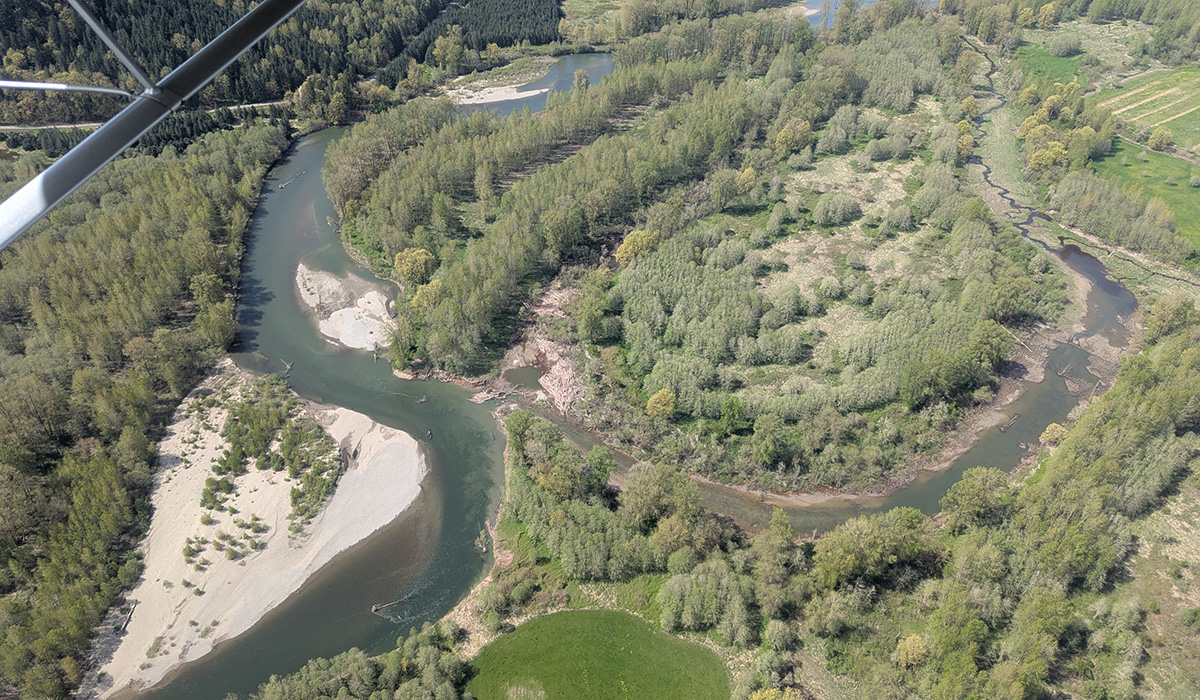 | Downstream view of the Snoqualmie River and the side channel and oxbow complex that formed in the Stillwater Floodplain during the winter of 2025. Photo by Paige Hosman. |
| A Recovering Floodplain and a New Phase of Restoration on the Snoqualmie River One of the Snoqualmie Watershed's most productive Chinook salmon spawning reaches is getting a second act. Wild Fish Conservancy is advancing the next phase of the Stillwater Floodplain Restoration Project along the Snoqualmie River near Carnation, Washington—building on a successful 2013 restoration effort that removed more than 2,100 feet of bank armoring and allowed the river to reestablish natural floodplain processes. The river's response was dramatic: over the following decade, it migrated into the restored area and reactivated historic floodplain habitats that had been disconnected for generations. During the winter of 2025, nature accelerated these changes further when the river breached into a historic side channel and oxbow complex on its own—a remarkable sign of just how dynamically this floodplain is recovering, and a glimpse of what's possible as Wild Fish Conservancy and partners work to restore more than 240 acres of floodplain habitat in the next phase of this project. Read the full project update on our website to learn more about what's planned for this recovering stretch of the Snoqualmie River. |
| | |
|
| Wild Fish Conservancy News and Updates Learn about Wild Fish Conservancy's recent legal victories, policy advancements, and advocacy efforts—plus ways you can take action for wild fish, and other important news and information from our organization. |
|  | Reading the Record: The Public Documents Behind Northwest Fisheries Management Decisions about wild fish are made on paper long before anyone sees a result in a river. Biological opinions, status reviews, hatchery genetic management plans, and harvest models are all public record—but almost none of it is written to be read by anyone outside the process. Wild Fish Conservancy's policy work includes staff who can parse a status review's risk methodology, follow an escapement time series across decades of changing survey methods, and tell the difference between a policy that binds an agency and one that merely guides it. In a new article, we pull back the curtain on what that work actually looks like—and explain how the public can access these records for themselves, as well as share legal or policy concerns with our team. Learn more on our website. |
| | | Protect Wild Fish—Become a Member Today Behind every Wild Fish Conservancy project and policy win are the people who make it possible—our members. A broad, engaged membership ensures we can respond immediately, speak with authority, and act independently when wild fish are at risk—providing the legal standing we need to pursue litigation, influence agency decision-making, and keep our advocacy science-based and free from industry or political pressure.
Become a member or renew your support today to ensure a thriving future for wild fish and their ecosystems. |
|
|
| |
|
| Speak Up to Bring Our Salmon Home: Public Comments Due September 16 | Decisions being made this fall will shape the future for our salmon, Southern Resident killer whales, and coastal communities—and right now, the public has a chance to weigh in. The Pacific Fishery Management Council meets September 18–21 in Vancouver, Washington, and the public comment period is open now. This is your chance to call on decision-makers to curtail unsustainable ocean fisheries and Let Our Salmon Come Home. Submitting written comments takes just a few minutes. Visit the Let Our Salmon Come Home website for sample comments and step-by-step instructions for submitting your comments through the Council's E-Portal. Don't wait to raise your voice—submit your written comments by September 16. |
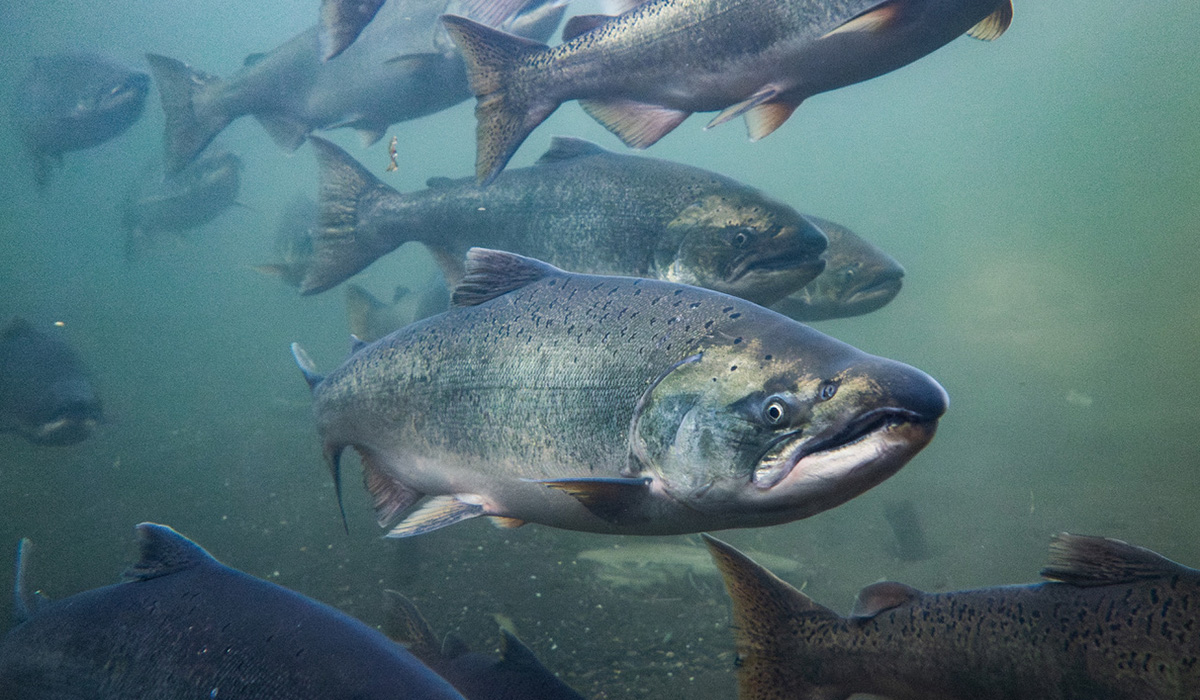
| | 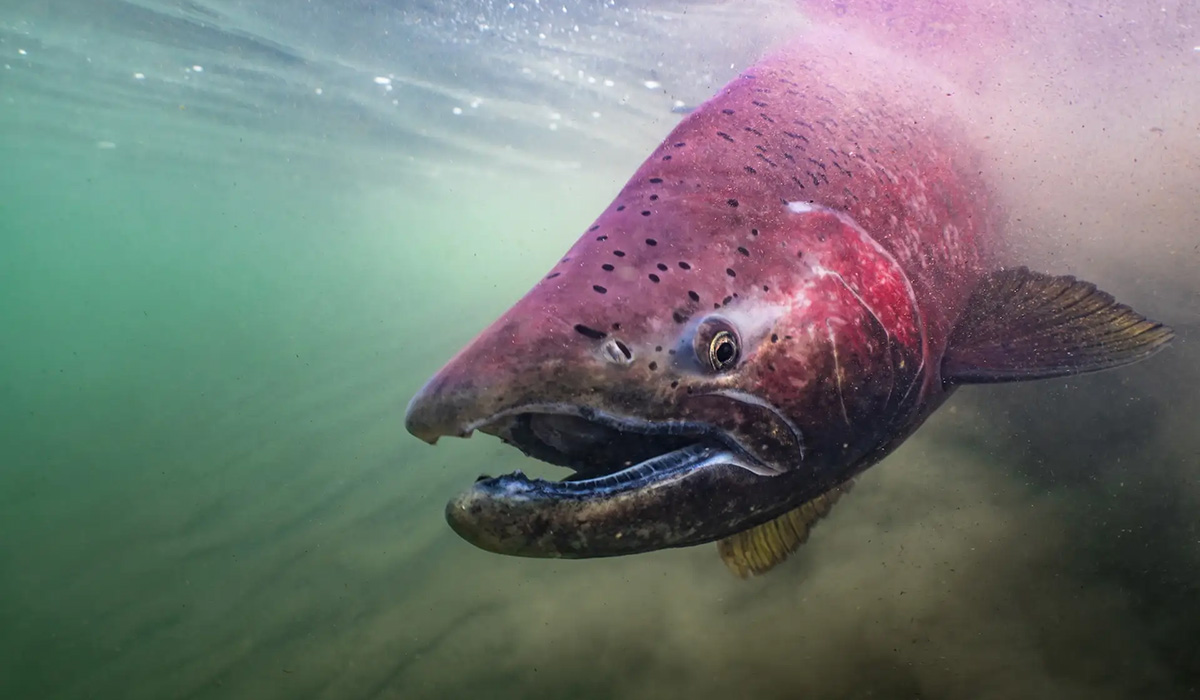 | Sign the Letter: Urge Oregon and Washington Leaders to Protect Our Chinook We're calling on Oregon and Washington residents to sign their state's letter urging state policymakers to reform the Pacific Salmon Treaty and protect our Chinook from unsustainable ocean fisheries. Every year, industrial-scale ocean fisheries north of the US–Canada border intercept massive proportions of threatened Chinook before they can reach the local watersheds, ecosystems, and communities that depend on them. As the Pacific Salmon Commission renegotiates the Pacific Salmon Treaty ahead of 2028, we have the most consequential opportunity in a generation to protect our Chinook from interception and Let Our Salmon Come Home. Oregon and Washington leaders need to hear from you. Add your name to your state's sign-on letter urging policymakers to reform the Pacific Salmon Treaty and keep Chinook out of unsustainable ocean fisheries. Signing takes less than a minute, and every signature strengthens the call. Sign your state's letter online now. |
| |
|
| | Wild Fish Conservancy
PO Box 402 | Duvall, Washington 98019
425.788.1167 | [email protected] |
| | |
|
| |
|
|